DDevang Pandya10h ago · 10 min readCaching 101: Why Facebook Keeps So Much in Memcached (and How to Cache Without Breaking Things)By Devang Pandya · Cloud Tech by Devang · Cloud • DevOps • AI — Made Simple This post is the full breakdown for the Bapu ki Class Reel on caching. If you came here after commenting CACHE, welcome. Bapcloudtechbydevang.hashnode.dev
ZZyVOP17h ago · 11 min readRate Limiting Algorithms: How to Protect Your API Without Annoying Your UsersEvery API eventually meets a client that sends too much traffic. Sometimes it’s a buggy retry loop, sometimes a scraper, and sometimes a perfectly well-meaning customer whose cron job just got ten tim13Zblog.zyvop.com
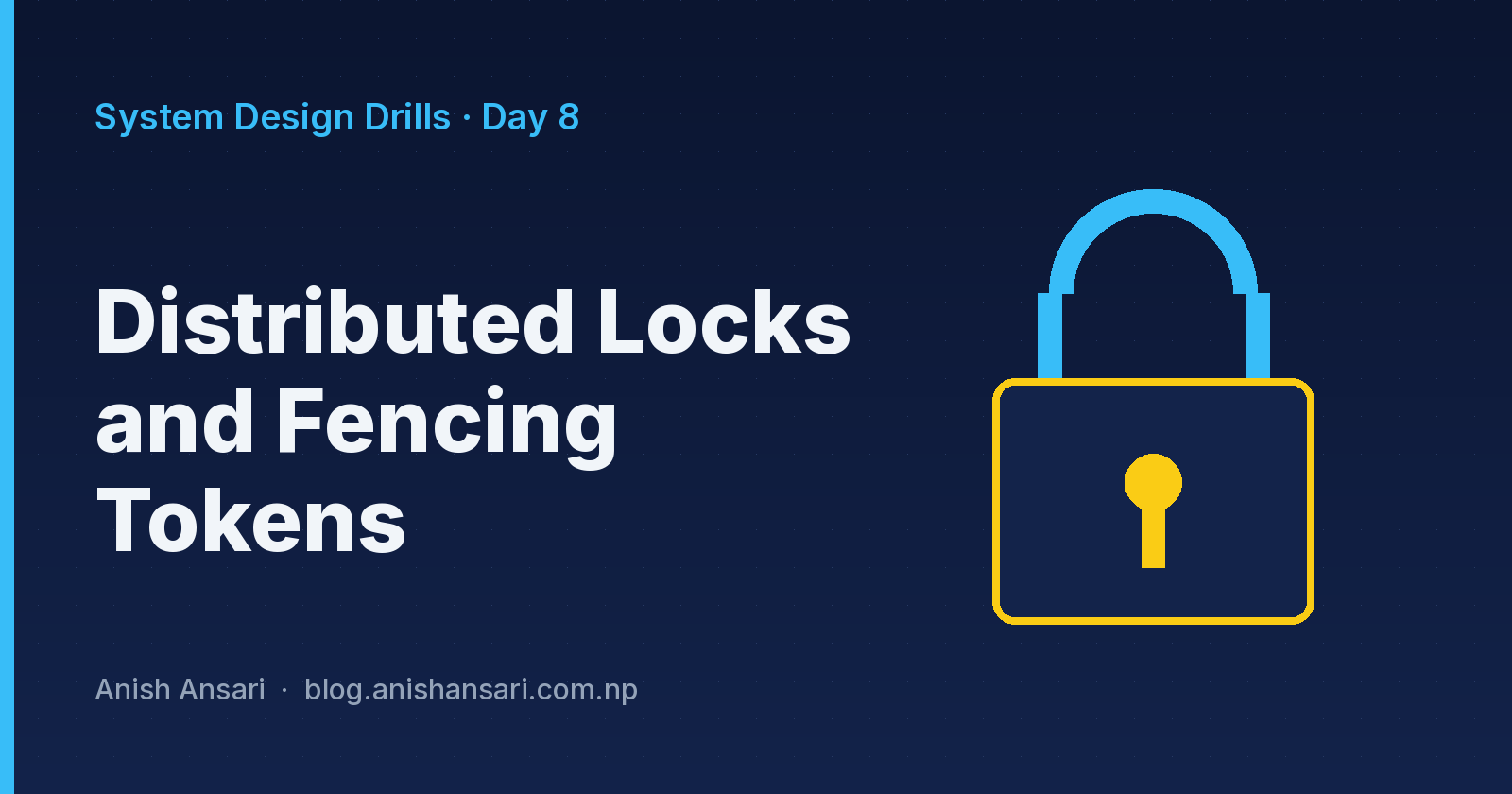
AAnish Ansari23h ago · 9 min readSystem Design Drill Day 8: Distributed Locks with Redis and Fencing TokensOne unit of a hot SKU is left, and two customers press "Buy" at the same moment on two different app servers. Both see "1 in stock", both checkouts succeed, and one of them gets an apology email. A mu3Zblog.anishansari.com.np
CCoding Macaw Bootcamp12h ago · 4 min readSecuring the Edge: Building AI Resistant APIs in Next.js and RustThe standard Web Application Firewall is obsolete. In 2026, malicious actors are not manually probing for SQL injections; they are deploying autonomous LLM agents that map your API endpoints, fuzz youcodingmacawbootcamp.hashnode.dev
MMemorySync1d ago · 5 min readFix "'ClusterPipeline' object has no attribute 'raise_first_error'" with OpenAI Agents SDK RedisSession on Redis ClusterDisclosure: I'm Mohammed, founder of MemorySync. I drafted this with AI assistance from the public GitHub issue and the SDK source. Code status: on Oct 25, 2026 I installed openai-agents 0.24.0 and rememorysync.hashnode.dev
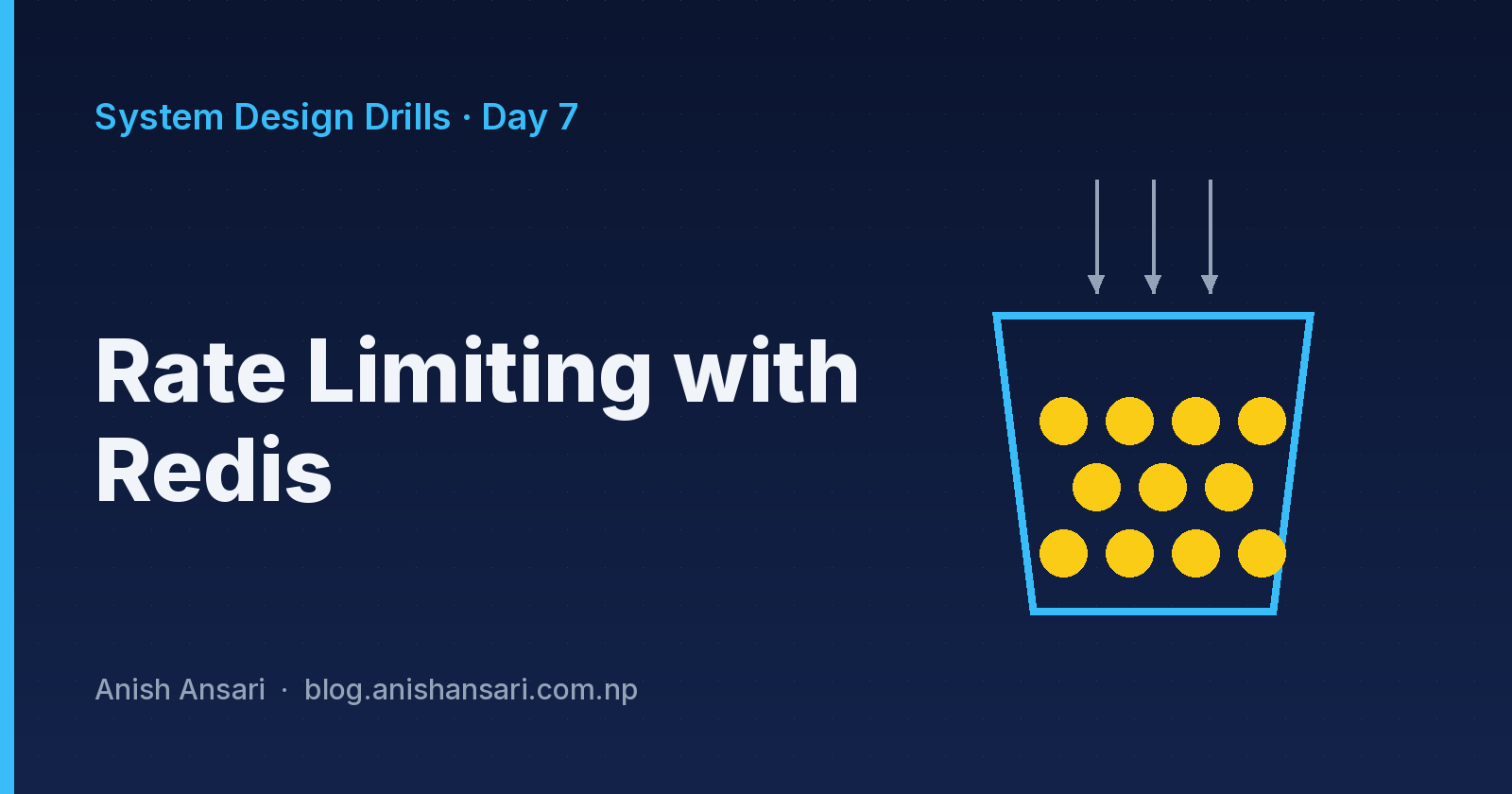
AAnish Ansari1d ago · 8 min readSystem Design Drill Day 7: Rate Limiting APIs, Logins and OTPs with RedisSomeone finds your OTP endpoint and starts hammering it. Every call sends an SMS, and you pay for each one. Rate limiting fits into a half-hour interview and still touches algorithms, shared state andblog.anishansari.com.np
MManideep Naidu2d ago · 7 min readThe bottleneck didn’t go away. It moved.Where we left off At the end of Post 1, my best Postgres version topped out at around 700 reservations a second. Beyond that, requests just piled up waiting for the same row. So for this part, I triedmanideepnaidu.hashnode.dev
YYash Dhawane2d ago · 16 min readCaching Strategies and Cache Invalidation: A Practical Guide for Backend DevelopersCaching makes applications faster. But keeping cached data correct when the original data changes is where things get interesting. Imagine you're building an e-commerce application. Every time a user yashdhawane.hashnode.dev
MMuhammad Ali Mughal3d ago · 7 min readRunning Laravel Queues in Production: Redis, Supervisor, Retries and Failed JobsLaravel queues feel easy in development. You set QUEUE_CONNECTION, run php artisan queue:work in a terminal, and emails send, PDFs generate and webhooks fire in the background. Then you deploy, close resume-ai.hashnode.dev
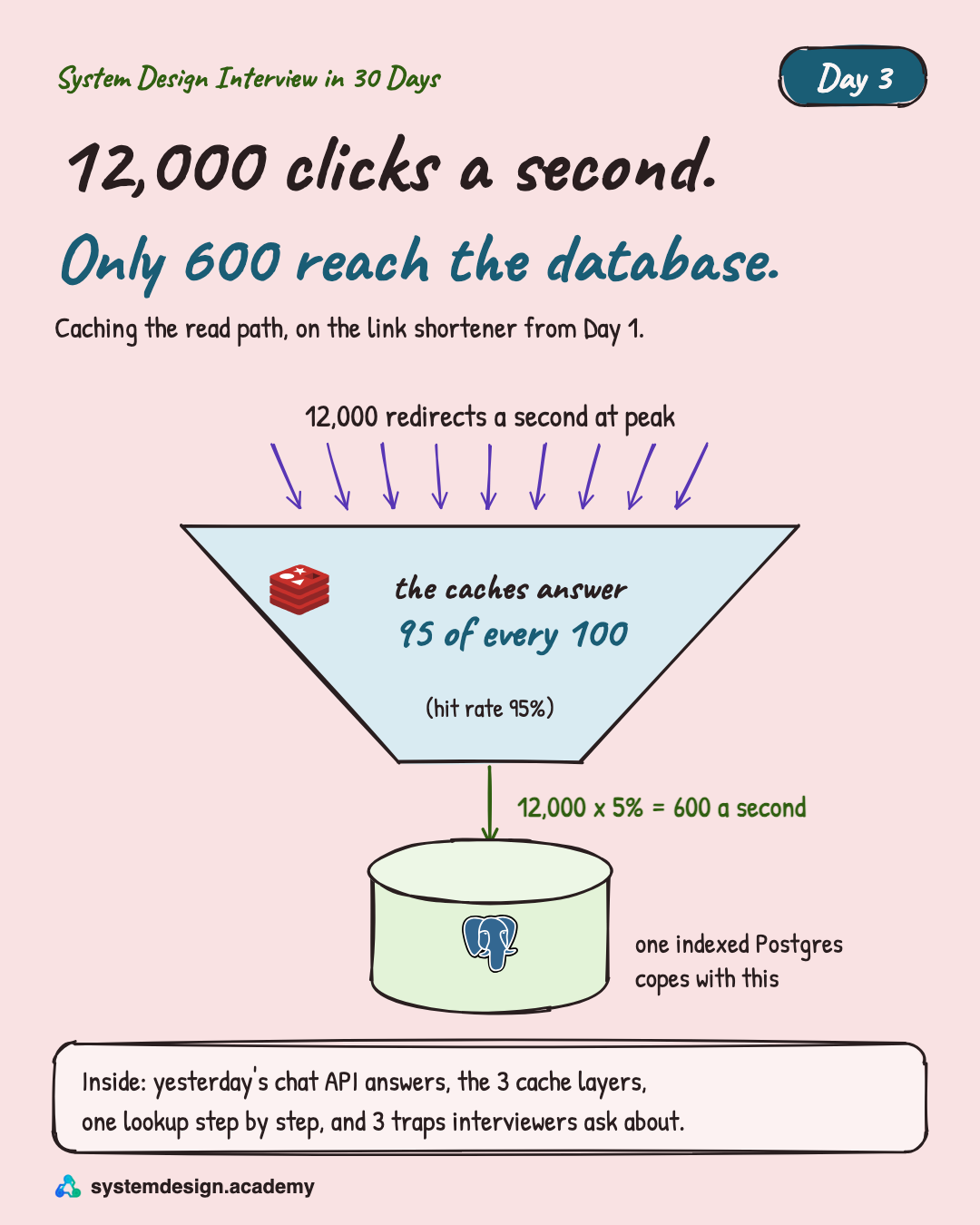
RRONI DAS3d ago · 7 min read12,000 Clicks a Second, 600 at the Database: Caching the Read Path (System Design Interview in 30 Days, Day 3)Day 3 of System Design Interview in 30 Days. On Day 1 we turned a vague prompt into numbers for a link shortener: about 4,000 redirects a second on average and 12,000 at peak. On Day 2 we wrote its APsystemdesignacademy.hashnode.dev