A shared action log would make the setup much easier to audit, especially when several specialists are involved. I’d take it one step further and attach the verification evidence to each action as well—not just which agent ran the command, but what observable state changed afterward. That would help distinguish “the command executed” from “the requested outcome actually happened.” It could also make disagreements between agents much easier to resolve because the system has a common evidence trail rather than relying on each agent’s interpretation of the result.
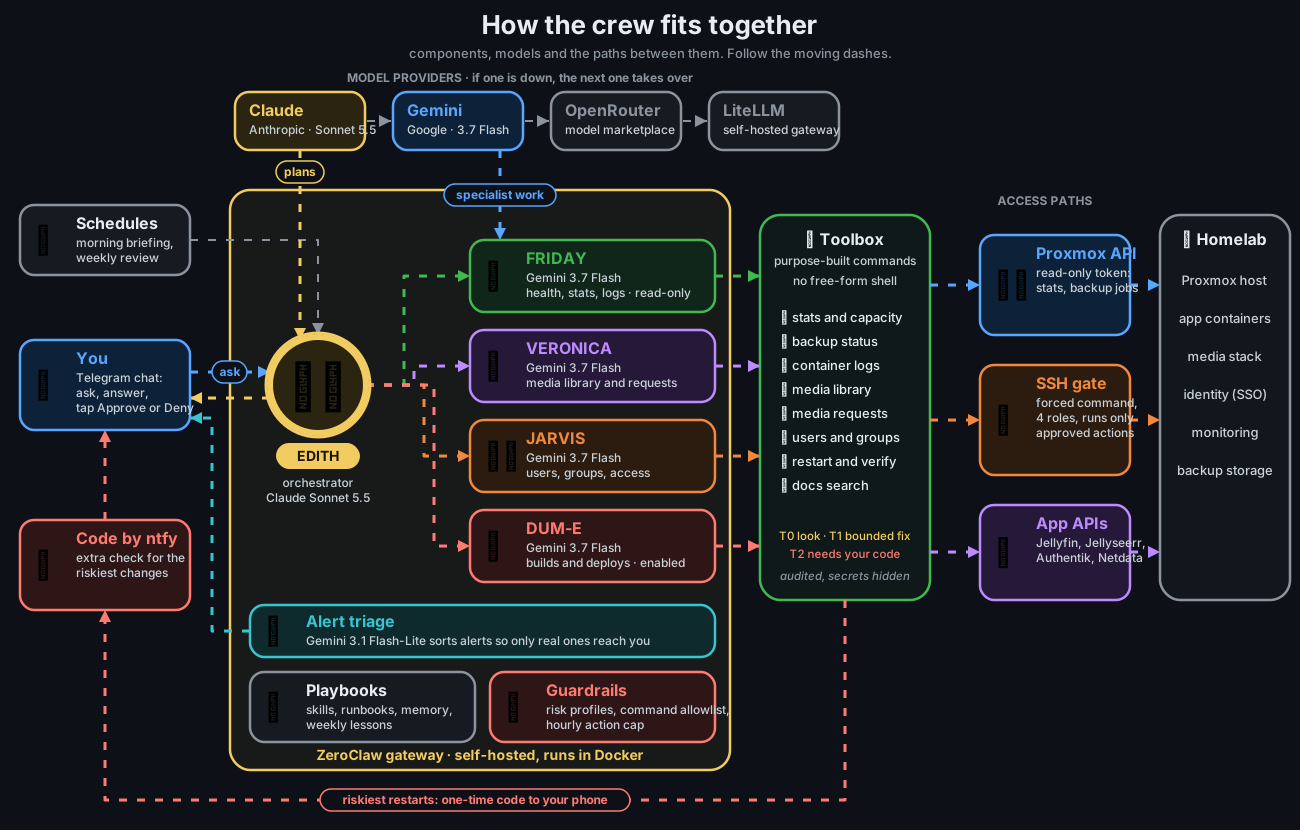
The 9 a.m. backup message is a great example of the right default: the agents report and propose, and you approve before anything gets deleted. The part I would add for a crew like this is a single shared action log, with each agent's name, the command it ran and the result, so when two agents disagree or something breaks you can replay who did what. Do your agents ever act without approval, or is every destructive step gated behind you?
iin1005am
Kartik N V J K
AI Developer | Making AI reliable, trustworthy & accessible to everyone | Active community contributor
The line that the harness is where the real engineering lives, not the model choice, is something I keep arguing in reviews. Per-hour action caps plus an orchestrator routing to read-only versus action specialists is a far saner default than one all-powerful agent with a good model behind it. The hard part is verifying the "careful colleague that says when it doesn't know", how do you test that EDITH abstains instead of guessing?