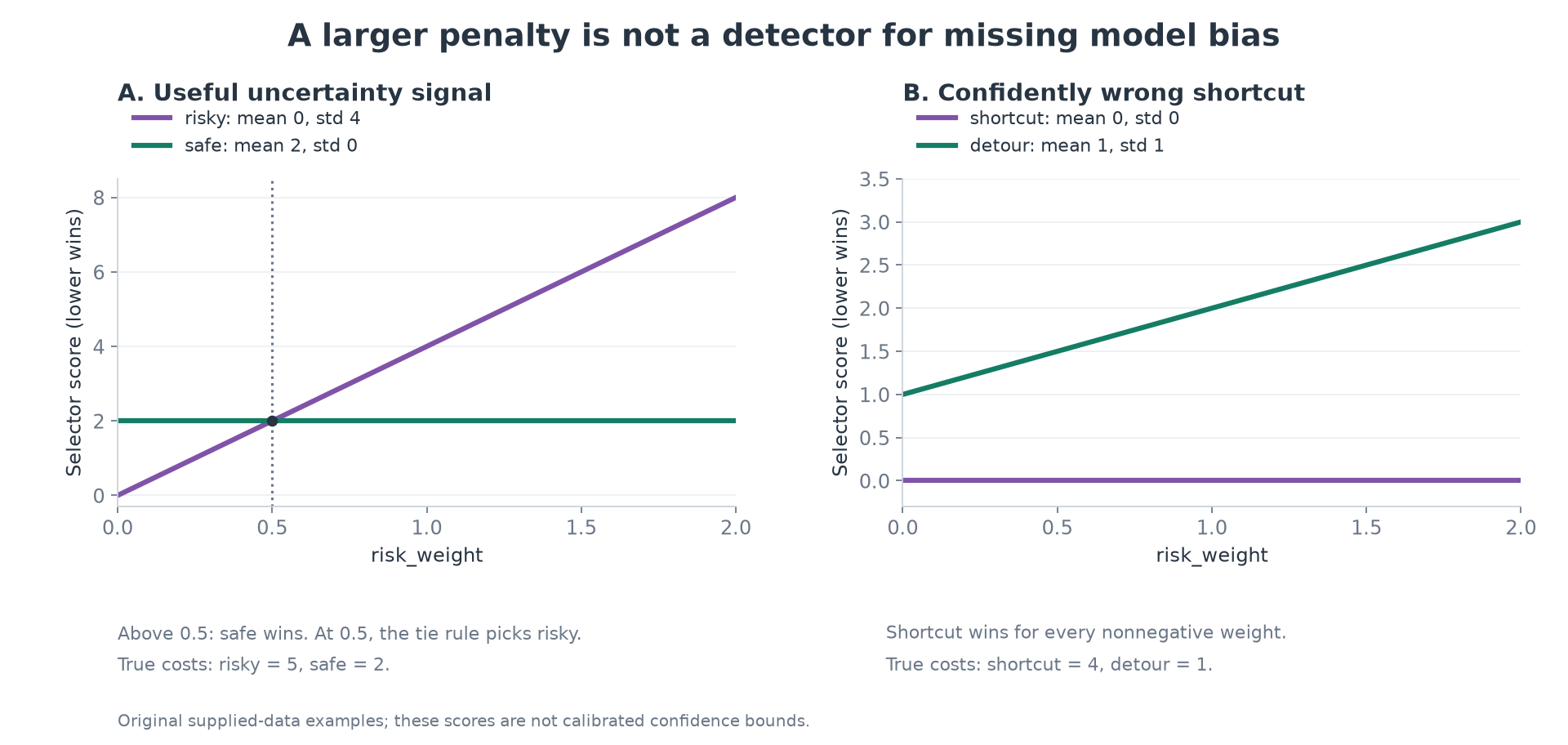
The point about the square root being part of the contract is underrated, since using variance instead of standard deviation makes the effective risk weight scale with the cost units and quietly changes which action wins. The second example nails the real limitation: if the model reports low variance for the risky action, no risk_weight can rescue the decision. A calibration check like comparing predicted standard deviation against the observed absolute error on held-out rollouts would be a natural follow-up exercise to tell those two failure modes apart.
Yunus Emre Vurgun
Writing about AI agents, hardware, and practical software.
The point about the square root being part of the contract is underrated, since using variance instead of standard deviation makes the effective risk weight scale with the cost units and quietly changes which action wins. The second example nails the real limitation: if the model reports low variance for the risky action, no risk_weight can rescue the decision. A calibration check like comparing predicted standard deviation against the observed absolute error on held-out rollouts would be a natural follow-up exercise to tell those two failure modes apart.