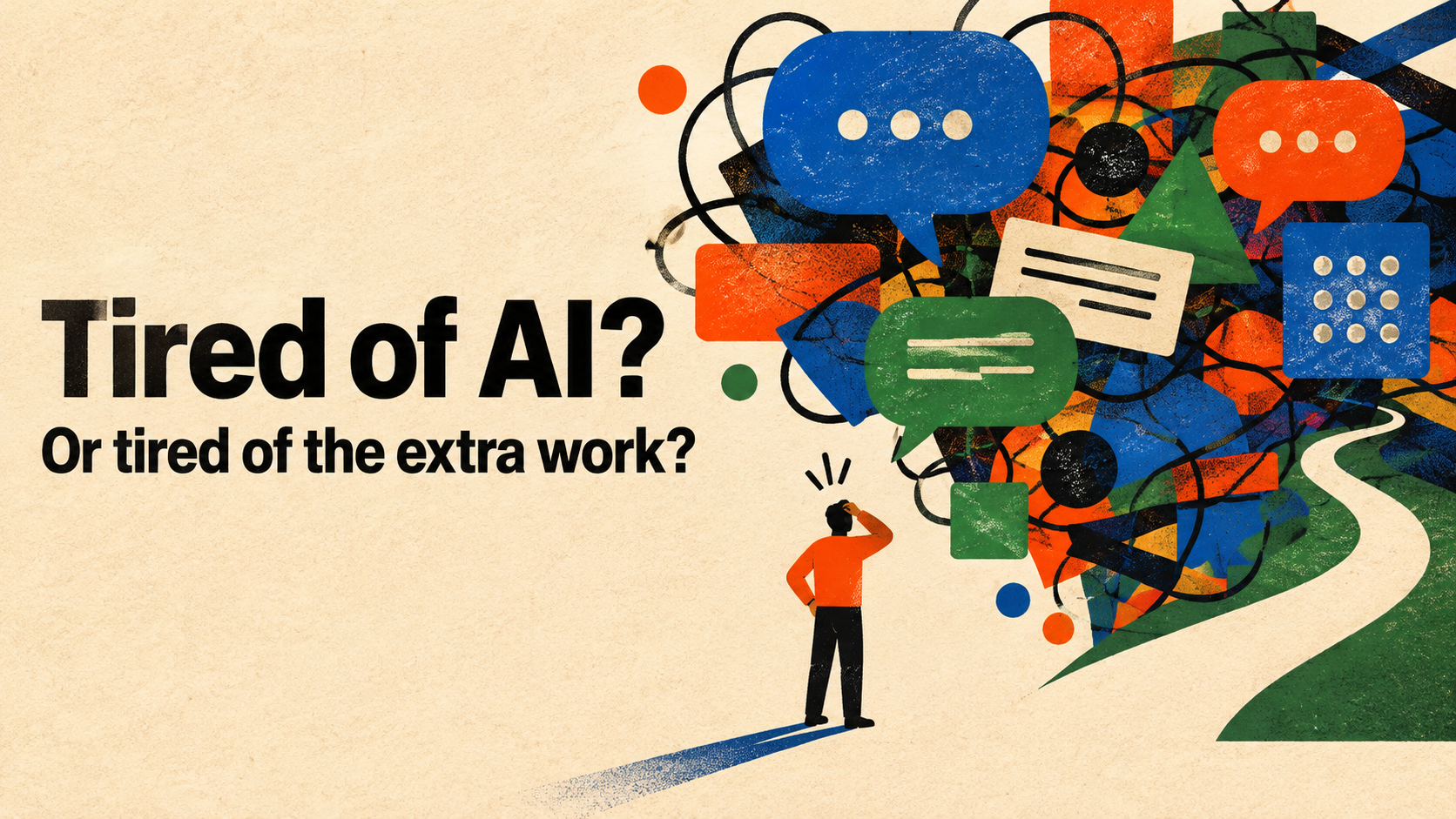
One useful way to evaluate an AI feature is to measure the work it shifts onto the user, not just the work it removes. A response that takes two seconds to generate but requires five minutes of checking, correcting, and verifying may be faster technically while making the overall experience worse. That distinction often gets lost when teams optimize for response time or feature adoption.
I’d also look at whether the AI feature reduces the number of decisions a user has to make. If an application already has a reliable status or next action, presenting it directly is usually better than making someone ask a chatbot. AI earns its place when it handles ambiguity or interpretation that deterministic UI cannot handle well—not simply because the capability is available.
Mateo Ruiz
One useful way to evaluate an AI feature is to measure the work it shifts onto the user, not just the work it removes. A response that takes two seconds to generate but requires five minutes of checking, correcting, and verifying may be faster technically while making the overall experience worse. That distinction often gets lost when teams optimize for response time or feature adoption.
I’d also look at whether the AI feature reduces the number of decisions a user has to make. If an application already has a reliable status or next action, presenting it directly is usually better than making someone ask a chatbot. AI earns its place when it handles ambiguity or interpretation that deterministic UI cannot handle well—not simply because the capability is available.