Day 01: Why model choice is rarely the first production AI problem
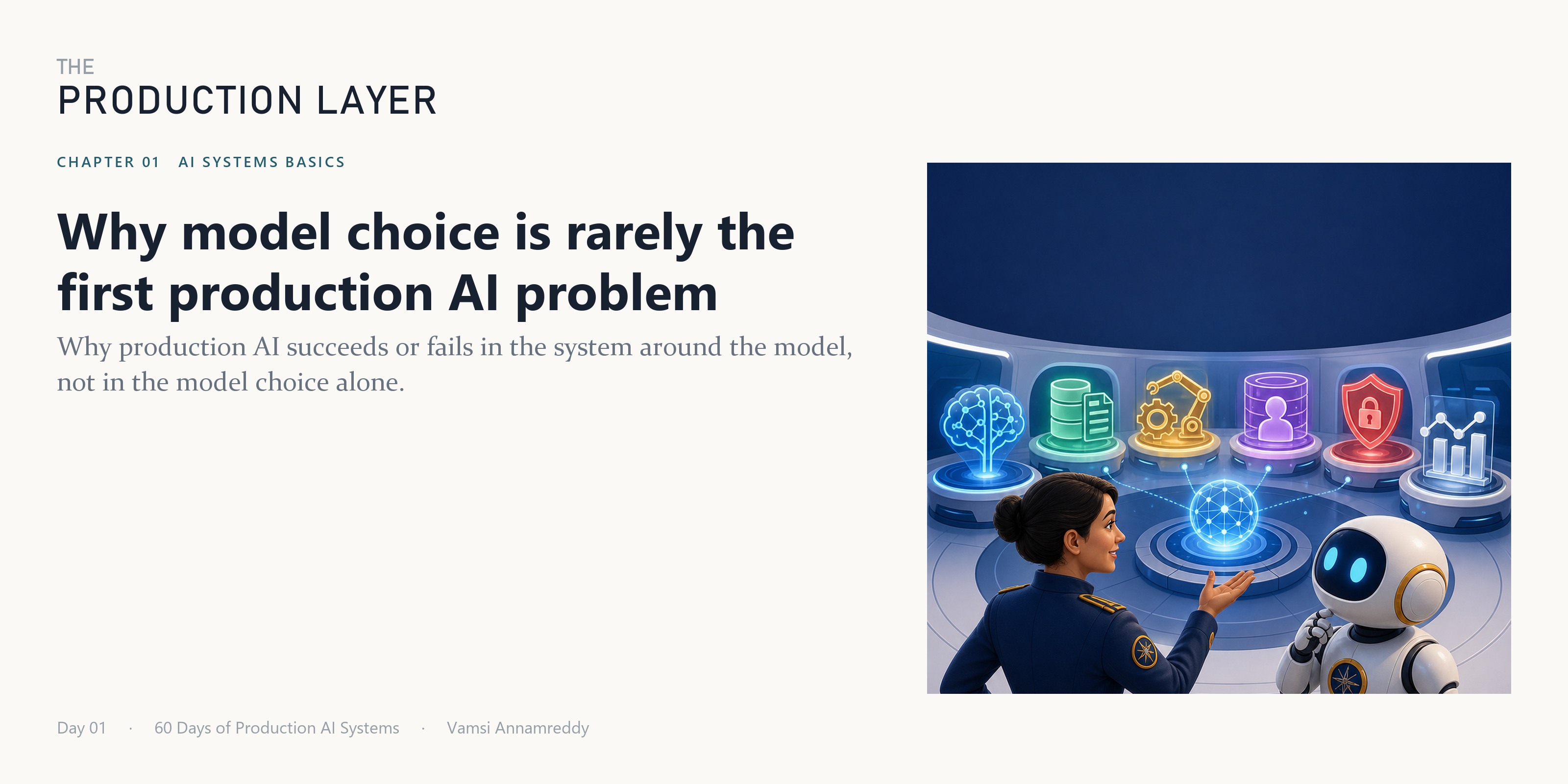
Most AI projects open with the same question: which model should we use? It is a reasonable question. It is almost never the one that decides whether the thing works. The question underneath Model cho
Responses
Markdown supported · ⌘↵ to post
Mateo Ruiz
One exercise that's helped our team is replacing the question "Which model should we use?" with "What happens when the model is wrong?"
That single shift changes the architecture discussion completely. You start thinking about evaluation, fallback paths, confidence thresholds, human review, monitoring, and ownership instead of benchmark scores.
In production, users rarely care which model is behind the product. They care that the system behaves consistently, recovers gracefully, and earns their trust over time. That's what ultimately determines whether an AI product succeeds.