See a need, fill a need: Untangling real-world Salesforce orgs, building healthy engineering teams, & shipping software without the burnout
Vendor demos show pristine systems, but real-world orgs are 10-year-old hoards of competing triggers, forgotten packages, and technical debt. And the teams running them are often burning out trying to keep the wheels turning. I’ve spent just under 20 years in the enterprise trenches—from making desk waffles to boost morale on support calls at LogMeIn to building team health frameworks and leading systems engineering at SurveyMonkey and Salesforce. I write about untangling messy systems, building solutions for complex systems and why genuine team care is just as critical as clean architecture.
Markdown supported · ⌘↵ to post
The red tape vs useful checks split is the hard part. Heavy process teaches people exactly where to cut around it, which ends up worse than no process. Where did you land on a minimum set for a small team, the checks you would keep even with two people and hourly releases?
Ascendra Ventures
A coordinated deploy that depends on one person staying late is a plan with a single point of failure, even when it works. I liked that your example was a small move, a site going from CRM hosting to IT, because the small ones are where nobody thinks a written plan is needed.
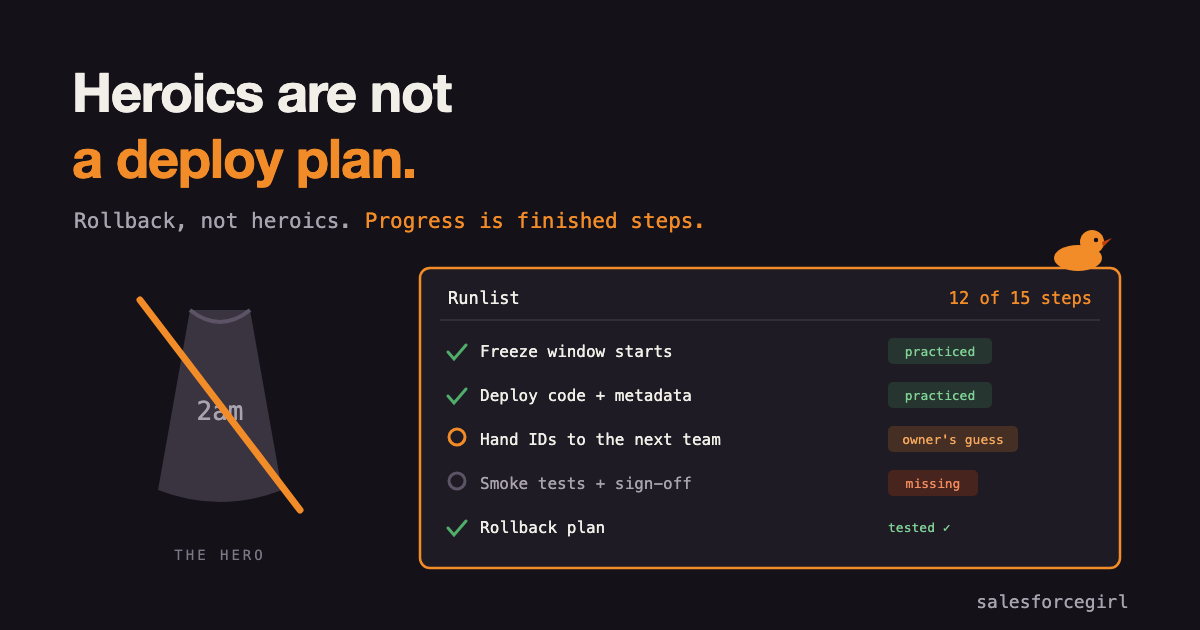
On the question in the replies about a minimum set for a small team, the list I would keep is short: a written statement of what deployed means for this change, one rollback step that has been tried at least once, a named owner for each team involved, and a check that runs after the release instead of someone clicking around. Anything beyond that can grow with the team.
A useful test for red tape versus a useful check is whether anyone can say which failure it prevents. If nobody can, people will route around it. Which check from that first deploy turned out to matter most?