AI engineering, agentic memory, machine learning, and system design at scale.
I work on AI systems and the infrastructure they actually run on: agentic architectures, memory for agents, retrieval, and the graph and data layers that keep model output grounded in something real. Formerly at Neo4j. I also write and teach the systems side that most AI content skips, from distributed systems and databases to the design decisions that decide whether a model ever reaches production. I run Total Technology Zonne on YouTube and I am building systemdesign.academy, an interactive course on system design, machine learning, and AI engineering, covering the parts most tutorials leave as an exercise for the reader. Mock interviews and prep packs: topmate.io/roni
Markdown supported · ⌘↵ to post
AI Developer
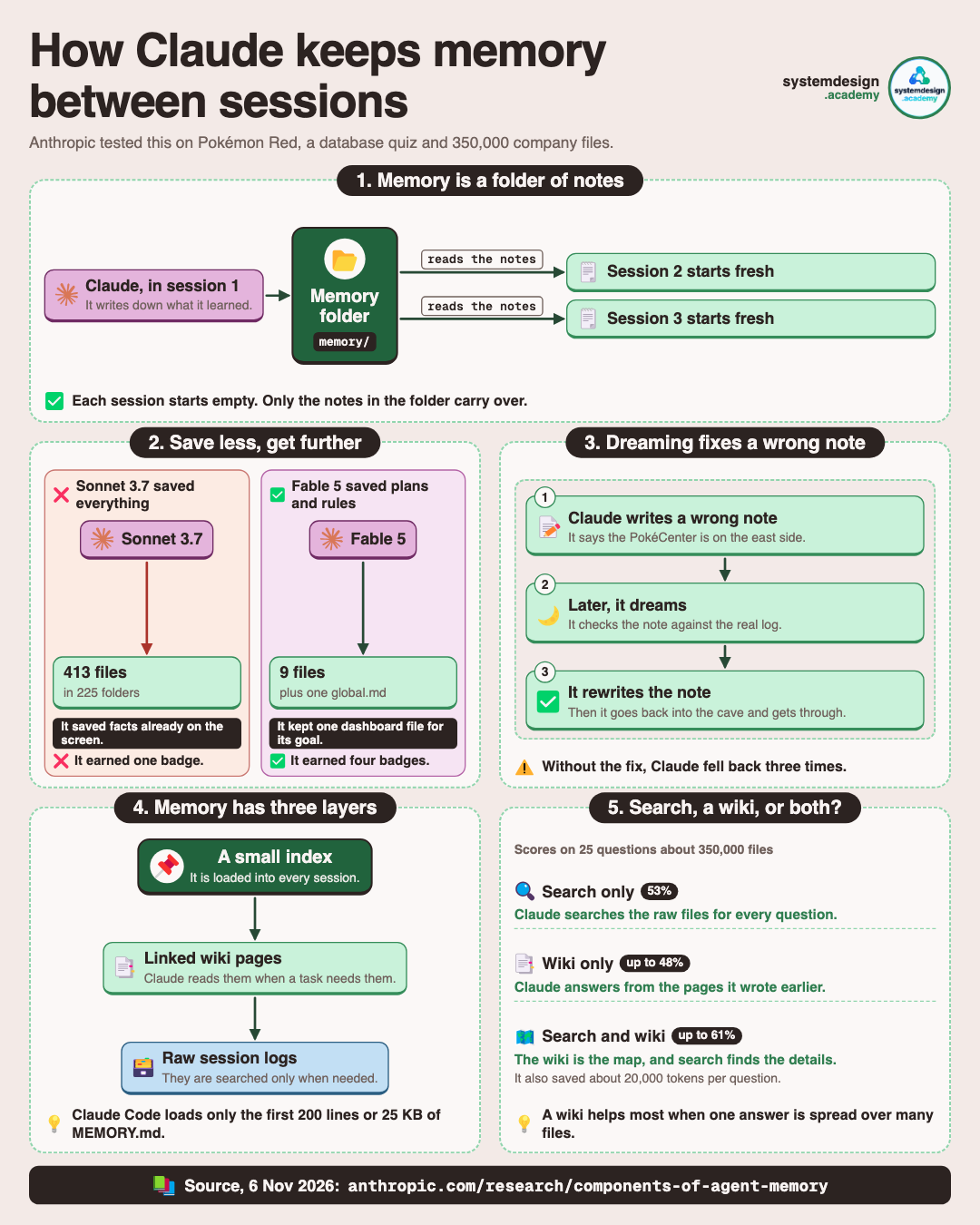
The Pokémon result is the most useful part to me: Sonnet 3.7 saved things that were on screen every turn, so the notes went stale and sorting them cost real steps. A simple filter seems to follow from it, which is to only persist what can't be re-observed cheaply, plus how it was verified. I wonder whether the 'one writer per page' rule is enough once several agents or sessions run in parallel, or whether you'd also want a last-verified timestamp so dreaming can prioritise stale entries. Did the write-only-mistakes rule hurt mainly because it dropped the successful patterns?