Stretching the hand-offs while keeping the real timing visible is a nice touch. Also like that it doesn’t need access to message content.
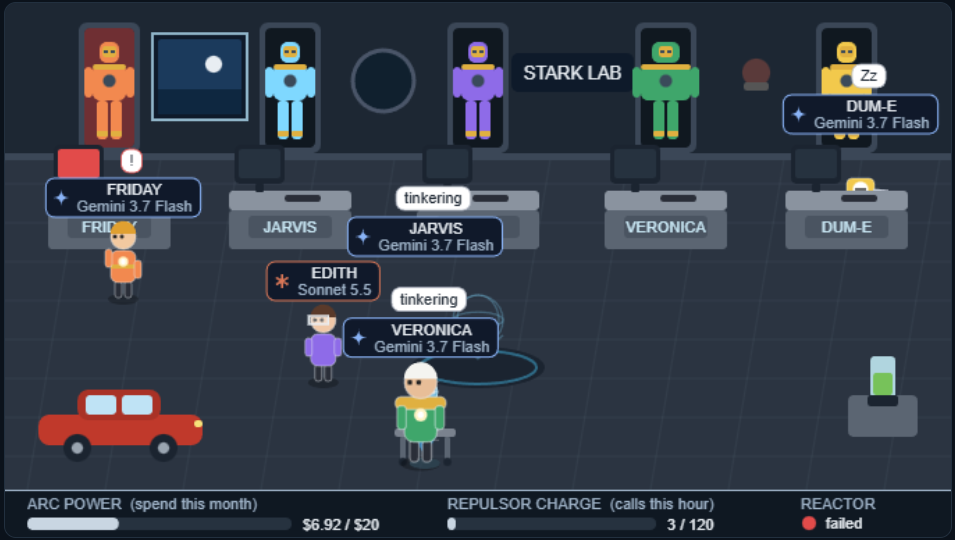
The bit where a 40 ms hand-off gets stretched to a couple of seconds but still shows "real time: 40 ms" is a clever compromise. I've lost hours to agent traces where a silent model fallback looked identical to a normal run, so the chip on the name tag when an agent drops to another model is the feature I'd copy first. Do you also flag when the fallback model's answers start drifting, or only that the swap happened?
This is a fascinating approach to making AI agents more observable and understandable. One of the biggest challenges with agentic systems is not just building agents, but actually seeing how they think, collaborate, and make decisions.
Creating a visual workshop around agent behavior feels like a great step toward making AI systems easier to debug, improve, and trust. The future of AI engineering will likely need more tools that help us observe the “process” behind the output, not just the final answer.
Really interesting work — excited to see how this evolves!
Showing "real time: 40 ms" next to the stretched hand-off is a good call. The display is exaggerated and it still tells you the true number. A viewer that can't write anything or see message text is the right default for something watching agents.
Julian Neagu
500+ AI tools shipped solo. Founder of VisionVix.
I've found that once you run a few agents, the hard part isn't getting answers. It's knowing what happened between them. Seeing the hand-offs makes debugging feel a lot less like guesswork.