See a need, fill a need: Untangling real-world Salesforce orgs, building healthy engineering teams, & shipping software without the burnout
Vendor demos show pristine systems, but real-world orgs are 10-year-old hoards of competing triggers, forgotten packages, and technical debt. And the teams running them are often burning out trying to keep the wheels turning. I’ve spent just under 20 years in the enterprise trenches—from making desk waffles to boost morale on support calls at LogMeIn to building team health frameworks and leading systems engineering at SurveyMonkey and Salesforce. I write about untangling messy systems, building solutions for complex systems and why genuine team care is just as critical as clean architecture.
Markdown supported · ⌘↵ to post
Salman Parvez | ML Systems
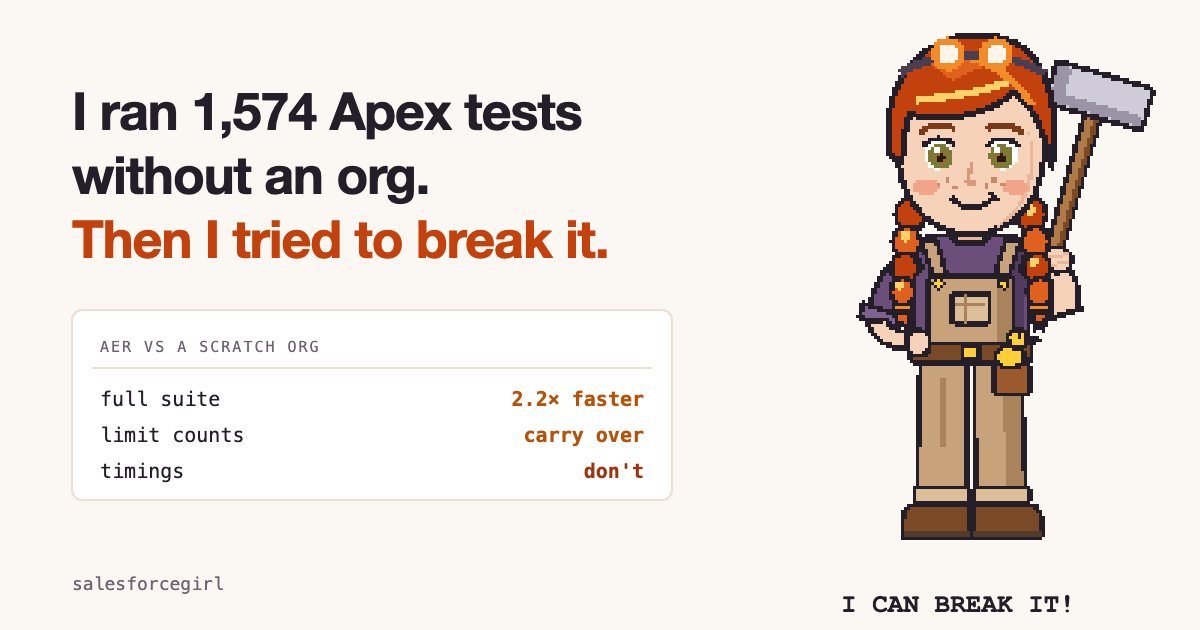
"Use aer's speed for your loop, and its counts for your code" is the clearest way I've seen to say what a local emulator is good for. The part I'd underline is steadiness: a clock that swings 30 seconds on identical code can't tell you whether your change made anything slower. I come from construction estimating, and the same split shows up there: counts carry from job to job, durations don't, because durations depend on site conditions nobody put in the drawings. Disclosing the trial key and the former-colleague connection up front, then running your own numbers and finding a DML-count bug, is how a tool review earns trust.