The quiet-workload WAL trap is the detail I hadn't thought about before — archive commands only fire on completed WAL segments, so a low-write-volume database can look backed up while its recovery chain quietly has a gap. I learned the same lesson the hard way with files rather than WAL: my nightly job reported success for months while a whole branch of the directory tree was silently skipped after a permissions change, and I only found out on the night I actually needed the files.
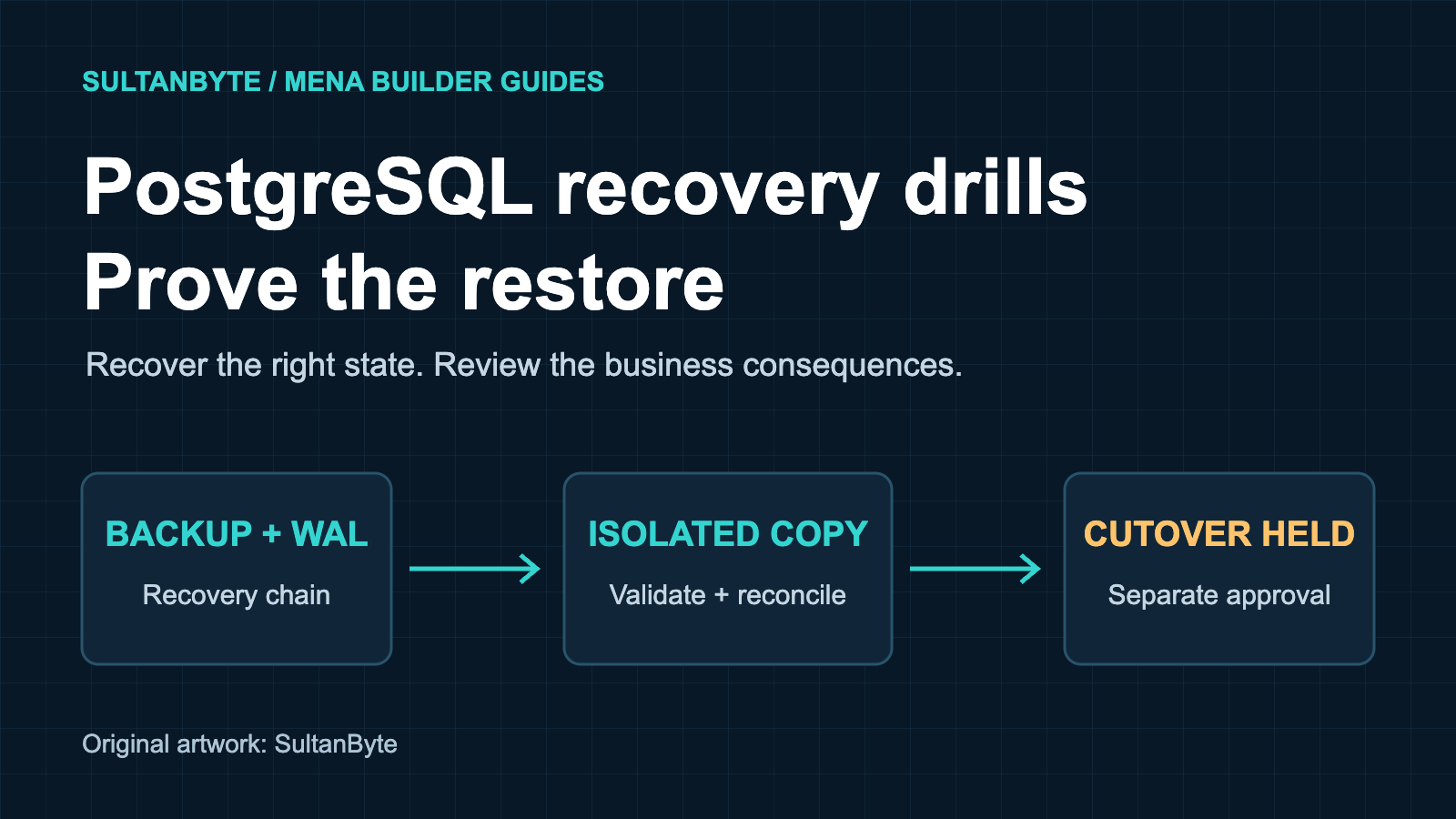
I also liked the point that a restored database does not undo an email already delivered or a payment already taken — that reconciliation step is the part most restore guides skip entirely.
One question on the isolation step: when you restore into the isolated copy, do you use the production KMS key to decrypt it, and if so, how do you test that the key will actually be available and usable in a real incident — for example, if the key were disabled, or the account that owns it were the thing that failed?
Mario Fang
The quiet-workload WAL trap is the detail I hadn't thought about before — archive commands only fire on completed WAL segments, so a low-write-volume database can look backed up while its recovery chain quietly has a gap. I learned the same lesson the hard way with files rather than WAL: my nightly job reported success for months while a whole branch of the directory tree was silently skipped after a permissions change, and I only found out on the night I actually needed the files.
I also liked the point that a restored database does not undo an email already delivered or a payment already taken — that reconciliation step is the part most restore guides skip entirely.
One question on the isolation step: when you restore into the isolated copy, do you use the production KMS key to decrypt it, and if so, how do you test that the key will actually be available and usable in a real incident — for example, if the key were disabled, or the account that owns it were the thing that failed?