That's a very good point. I especially agree that those safeguards should be deterministic regardless of whether the change was written by a developer or an AI agent.
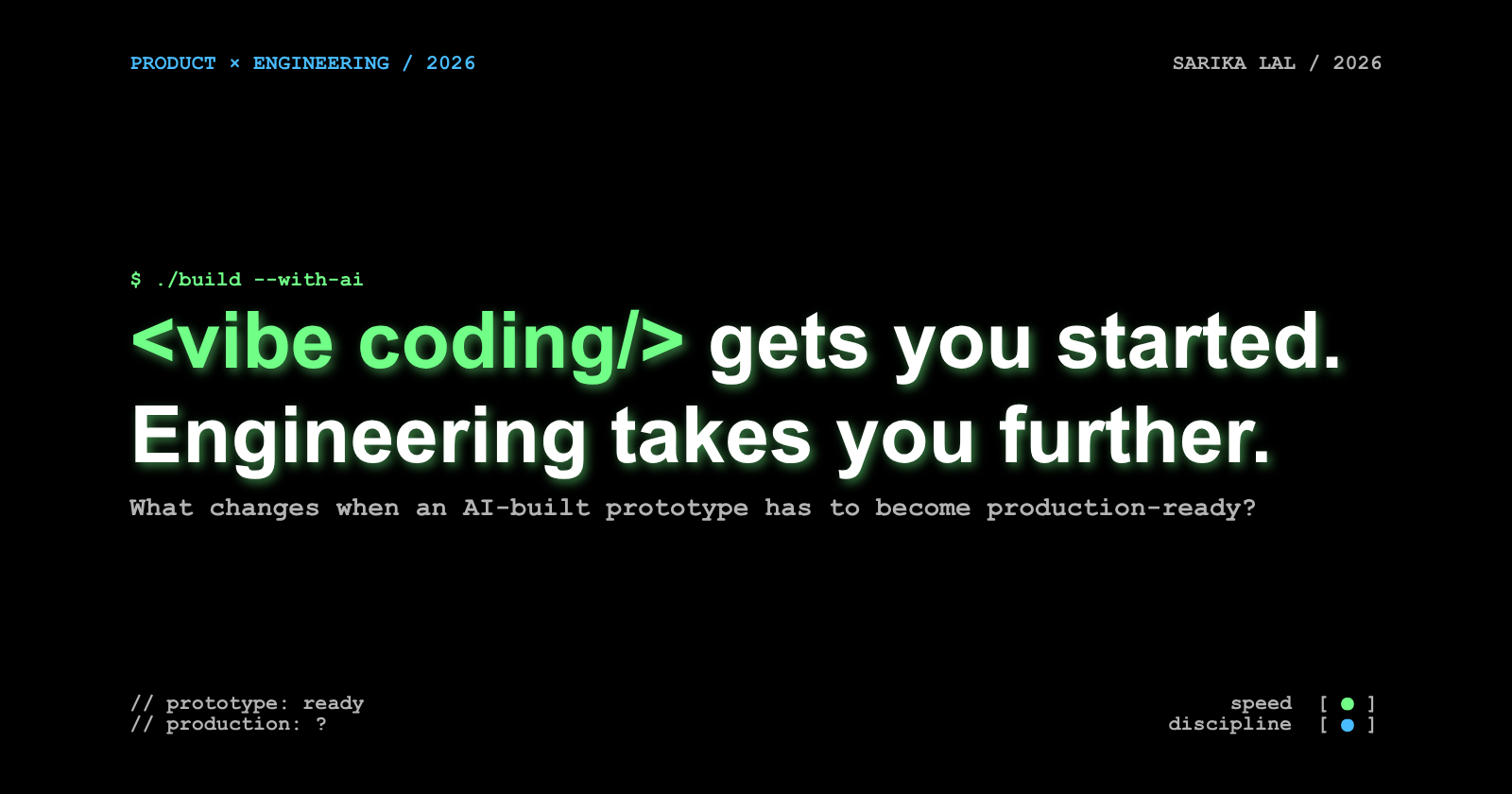
It also makes me wonder where we draw the line between vibe coding and AI-assisted engineering. The original appeal of vibe coding is that intent can replace much of the implementation knowledge required to build something. Once we introduce structured tests, static checks, architectural controls and human review, AI is still making development faster—but perhaps we're no longer really “vibe coding.” We're engineering with AI as an accelerator.
That distinction is something I've been thinking about more since writing this.
Adam Lewis
Product Engineer/Architect navigating the AI revolution
The signal I watch for is the first one on your list, small changes creating unrelated regressions. That is the point where prompt-and-test stops being cheap, because every change needs a human to rebuild confidence that the tooling should be supplying. We've kept the agent and made the gates deterministic instead, tests and static checks that run on every change regardless of who or what wrote it. The cost of change stays visible on the build, which is most of what the hybrid model needs.