FeedDiscussion
Everyone's Building AI Agents. Almost No One Will Trust Them.
2026 is "the year of the agent." The demos are jaw-dropping. But there's a gap between a demo that dazzles and a system you'd let touch production — wider, more expensive, and more uncomfortable than
simplyexplained.hashnode.dev8 min read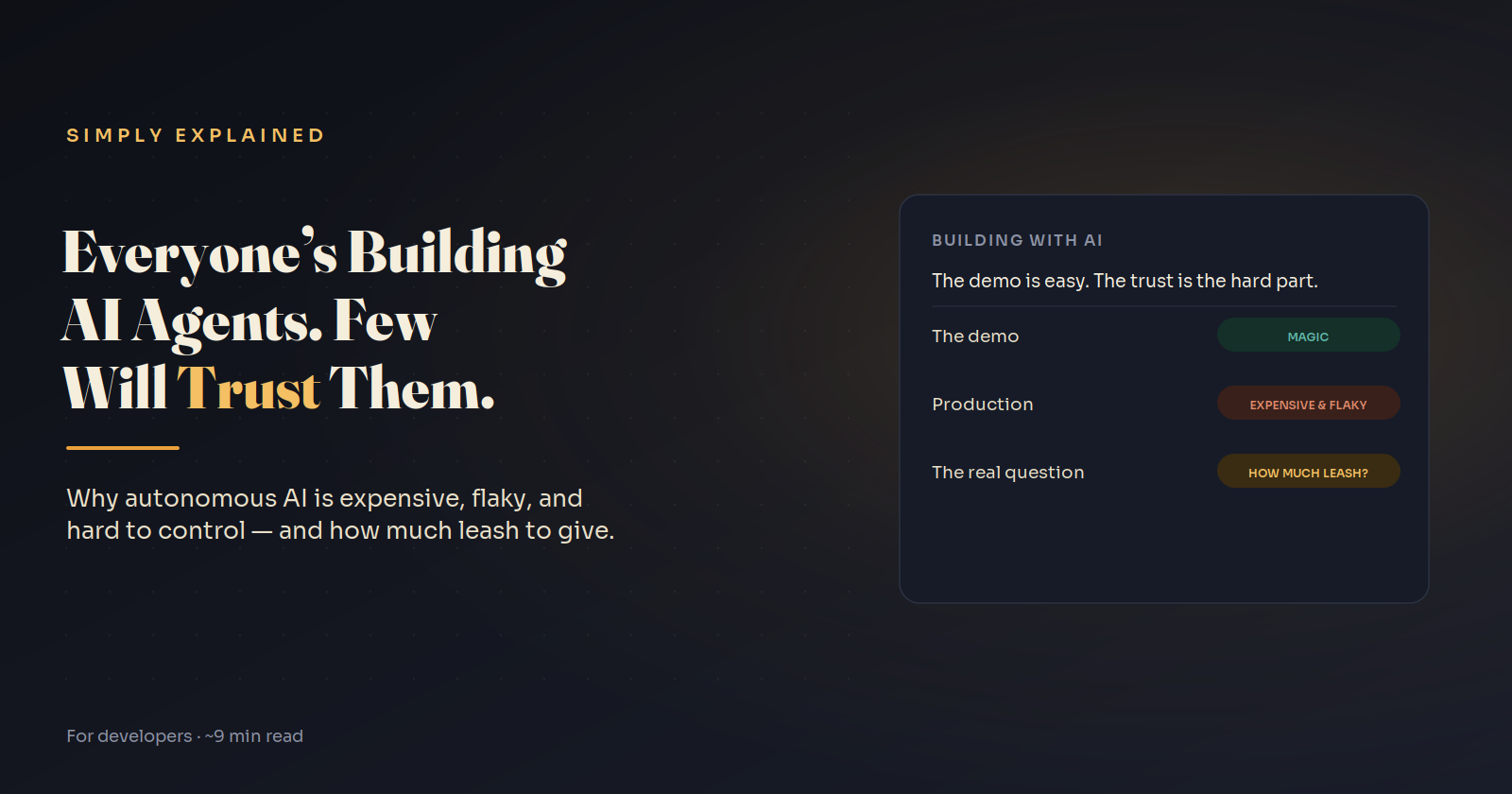
#artificial-intelligence#ai-agents#softwareengineering#programming-ciovqvfcb008mb253jrczo9ye#programming-blogs#programming-tips#llm
The autonomy slider is a great way to think about it. One dimension that makes the reliability problem harder is agent identity. Right now most agents run under the users own API keys or session tokens, so every action the agent takes is indistinguishable from one the user took directly. That makes audit trails impossible and liability hard to assign. Giving an agent its own keypair that signs its actions changes this: you get a clear chain of provenance for every decision, and you can scope the agents authority to exactly what it needs. For the act with checkpoints pattern, that means the checkpoint can verify the agents action against its authorized scope before it commits. Agent identity infrastructure is still early but it is one of the missing pieces that makes the autonomy conversation less risky.