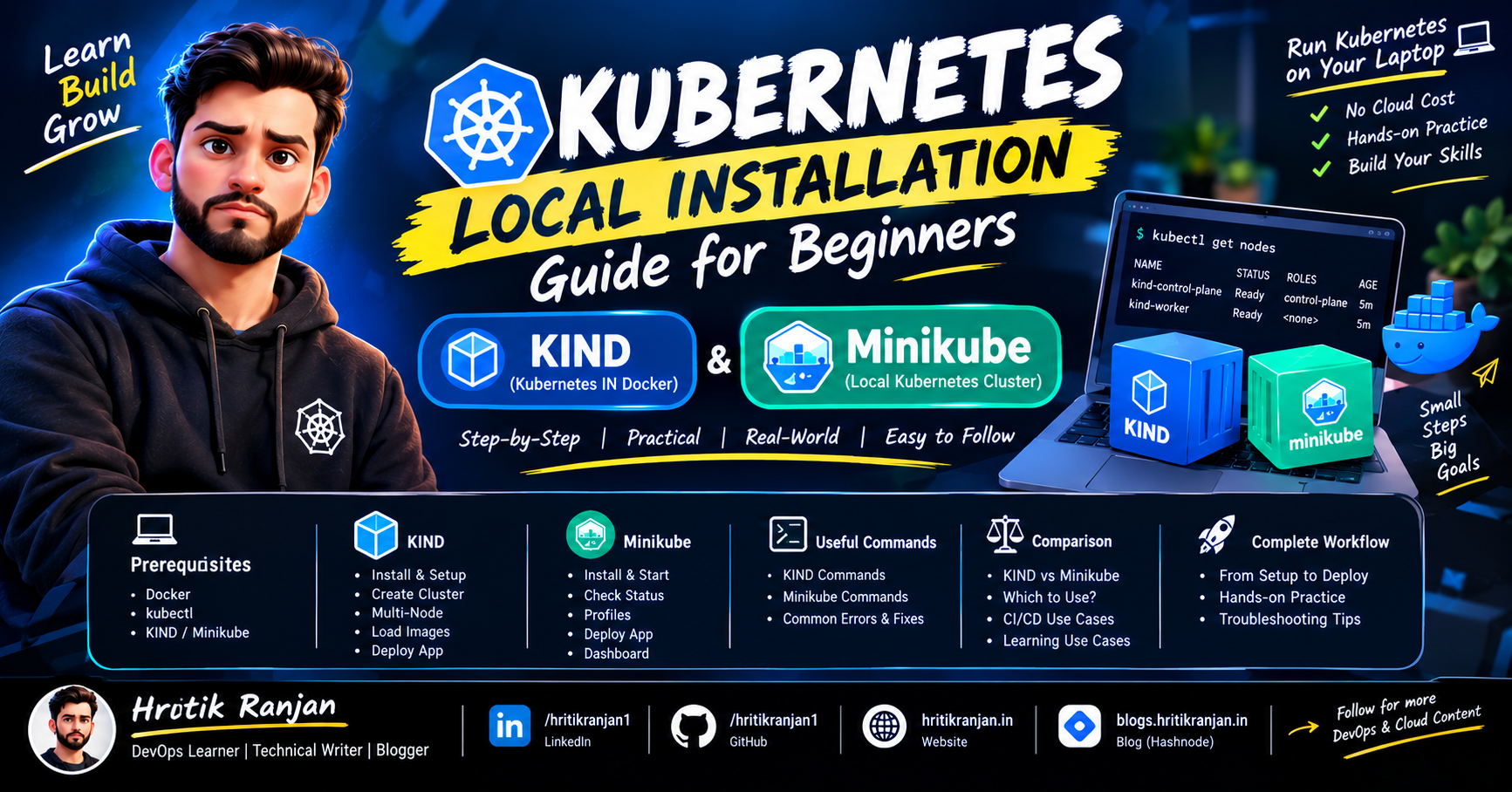
Feb 12 · 7 min read · 1. Introduction to Kubernetes Kubernetes is a platform designed to help run applications in a modern, scalable, and reliable way. In earlier days, applications were installed directly on physical servers. If the server failed, the application would a...
Join discussionFeb 2 · 3 min read · In early days, if the company wanted to deploy their grand play software , either they had to buy an in-house server or through the third party did buy/rent server. Later on that physical machine they would install all the services necessary one by o...
Join discussionJan 26 · 5 min read · This blog is for anyone who has used Kubernetes Pods but still felt confused when seeing states like Pending, ContainerCreating, 0/1 Running, CrashLoopBackOff, or ImagePullBackOff. This post explains the Pod lifecycle strictly as a timeline, from the...
Join discussionJan 26 · 5 min read · So far, you’ve learned: Day 1 → What MLOps is and why it matters Day 2 → ML lifecycle Day 3 → Data engineering basics Day 4 → Data drift and data quality Today we answer another key question: Why do companies carefully track every ML experiment, eve...
Join discussion
Jan 15 · 7 min read · Why copying Helm charts from GitHub is dangerous Helm is one of the biggest reasons Kubernetes became usable for normal humans. Before Helm, “deploying an app” meant writing a pile of YAML, wiring ConfigMaps, Secrets, Deployments, Services, and somet...
Join discussionJan 9 · 1 min read · Skip the 4-year wait: start your cyber career smarter Thinking about cybersecurity and comparing options like Baikal State University with online pathways? Traditional degrees can mean 4+ years on campus, high tuition, and limited hands-on labs. AlNa...
Join discussion