Feed
Discussion
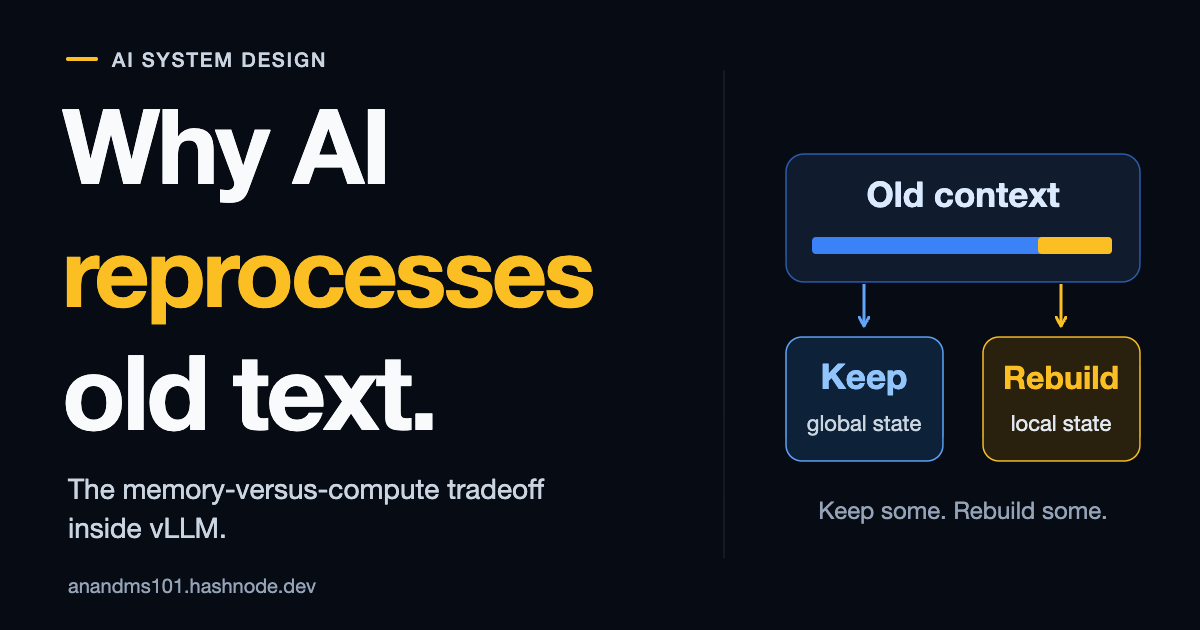
An Attention Window Is Not a Checkpoint: Inside vLLM's 128-Token Replay
You ask a coding agent to fix a retry bug: Fix the failing retry test. Keep the public API unchanged. It reads the client code, opens the test, makes a small edit and runs it. The test still fails.
Responses
Markdown supported · ⌘↵ to post
Kartik N V J K
AI Developer | Making AI reliable, trustworthy & accessible to everyone | Active community contributor
Opening on the coding-agent task that keeps failing and then going into the 128-token replay is a good way in, because I think most people treat the attention window like durable state when it is not. The distinction from a checkpoint is worth hammering: nothing about the window survives the way a real checkpoint would, so "it remembered a second ago" is doing a lot of unearned work. Did the retry-test example actually trace back to the replay boundary, or was that mostly the hook?