Creating intuitive and user-friendly experiences
I am a full-stack developer with a passion for creating intuitive and user-friendly experiences. With a strong background in frontend development and a deep understanding of backend technologies, I excel in building robust and scalable applications. My expertise spans across various frameworks and languages, allowing me to adapt to different project requirements. I am dedicated to staying updated with the latest industry trends and continuously improving my skills to deliver high-quality solutions.
Markdown supported · ⌘↵ to post
A useful comparison. For small projects, I would keep real secrets out of the image and out of any env_file in version control, and use environment: only for non-secret config that changes per deploy.
Node Edge Ops
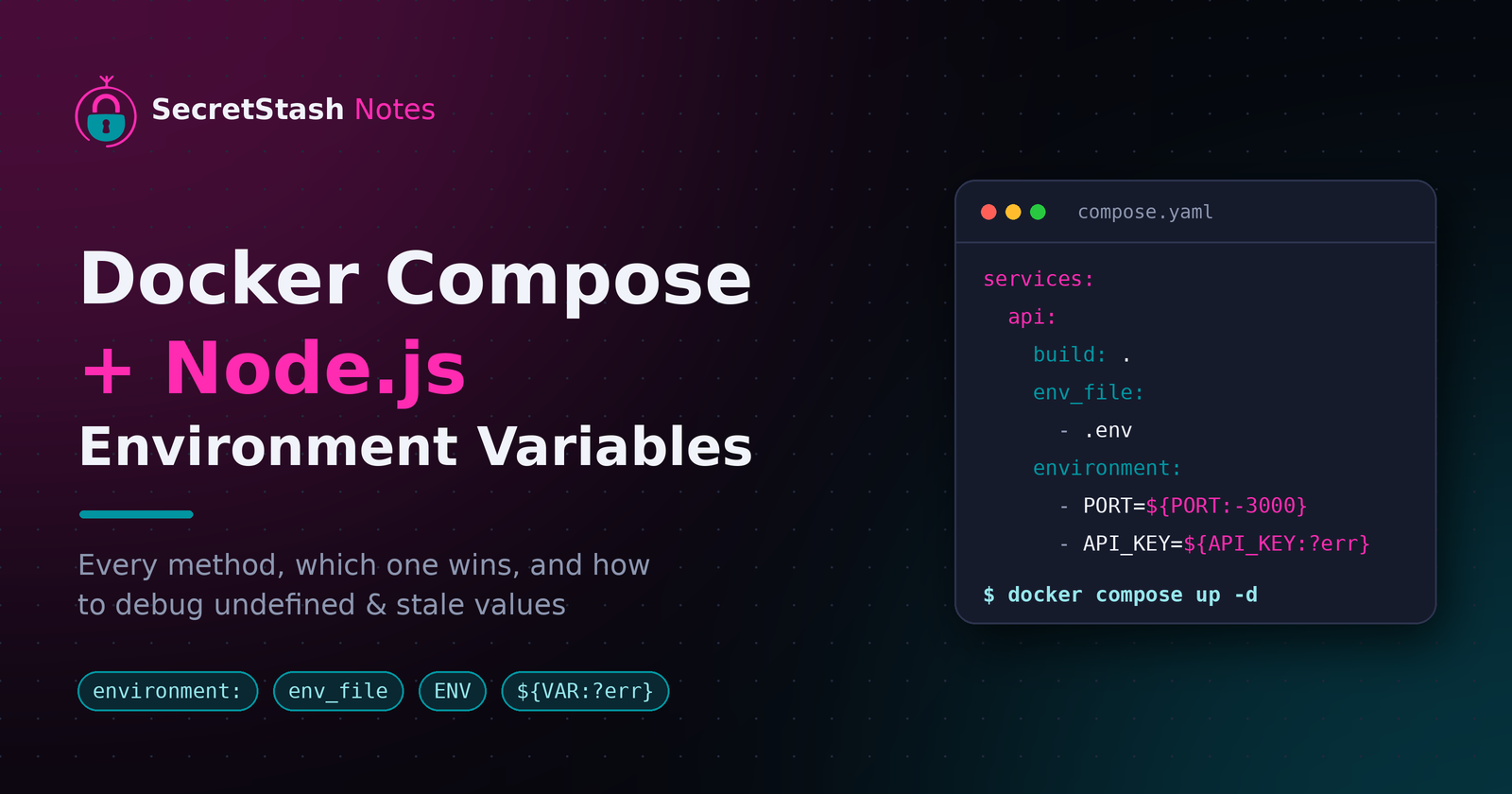
When Compose injects Node env, treat environment: as the deploy-time override layer and keep secrets out of image ENV and out of committed env_file. Order matters: a Dockerfile ENV that looks fine locally still loses to environment: at runtime, while an env_file that is only mounted in one service leaves sibling containers with undefined process.env keys. Prefer a short allow-list of non-secret config in Compose, inject secrets from the orchestrator or a runtime secret mount, and fail fast at boot if required keys are missing rather than discovering undefined halfway through a request.
Ops check after a compose config change: print the effective env inside the Node container for the keys you care about (without dumping secrets into logs), hit a readiness path that asserts those keys parsed, then restart only that service and compare. A sudden undefined after a rebuild usually means the wrong file was referenced, a key was renamed in one layer but not another, or the process still runs an old container that never received the new environment: block.