Strong point. We agree that the enforcement boundary has to move below the prompt layer. Model instructions are mutable context; they should not be the final authority mechanism.
For consequential actions, our architectural direction is an external deterministic authorization layer with narrowly scoped credentials or capabilities, so compromised reasoning cannot expand execution rights.
I’d make one distinction on persistence:
Persistent identity should not imply persistent authority.
A durable agent identity can survive restarts and be re-associated with an authoritative delegation or policy record. But the resulting authority should remain scoped, expiring, independently revocable, and auditable.
On restart, the system should reconstruct current authority from trusted external state rather than inherit ambient privilege from previous model context.
Persistent identity, without persistent ambient privilege.
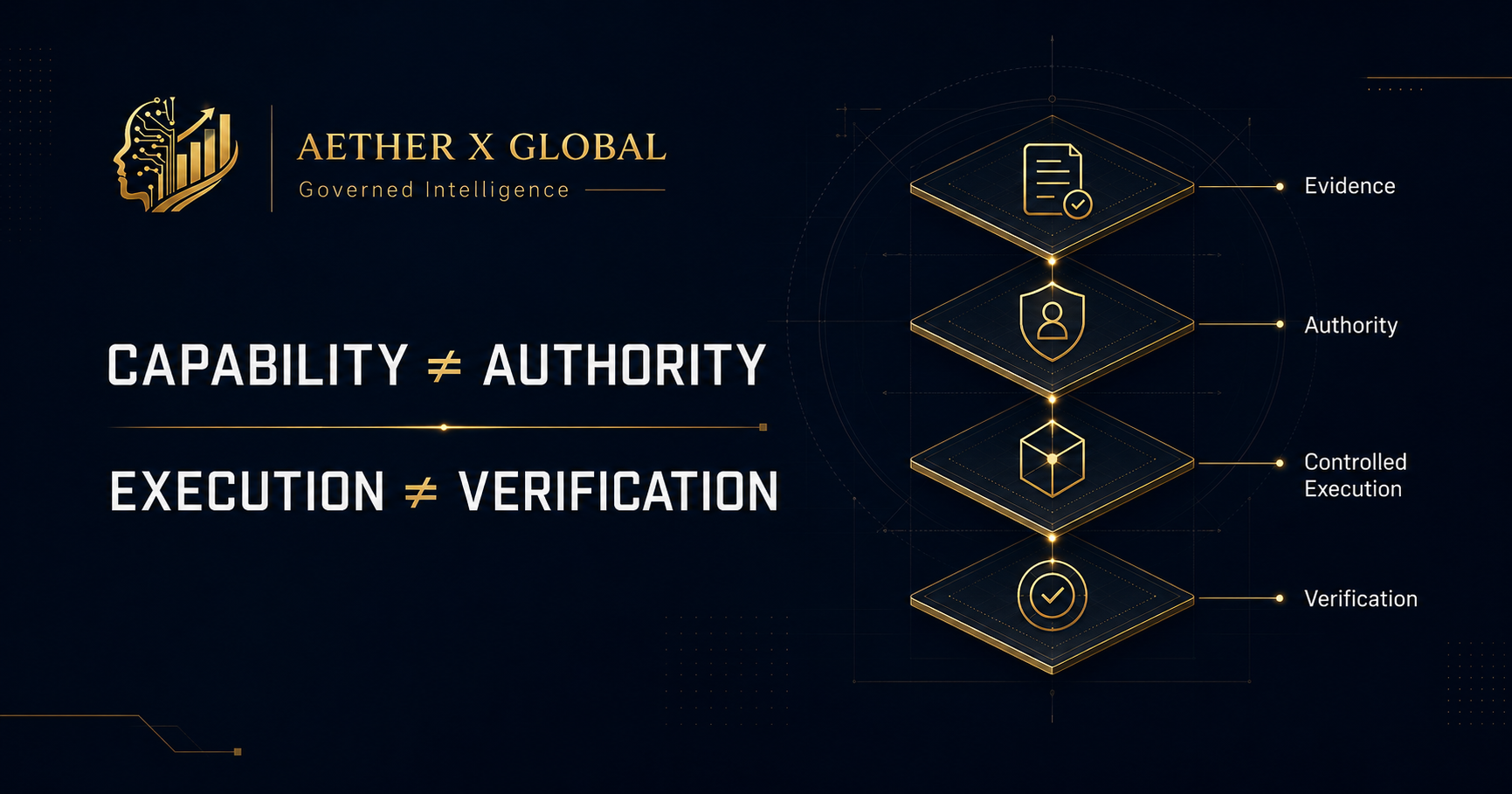
Separating capability, authority, and verification is the right decomposition, and authority is the one teams under-specify. I apply the same split when I vet MCP servers before trusting them in an agent, checking what a tool is allowed to do separately from what it can do, and wrote it up here: kartiknvjk.hashnode.dev/how-i-evaluate-mcp-server…. Where do you enforce the authority boundary, inside the agent or outside it?