Feed
Discussion
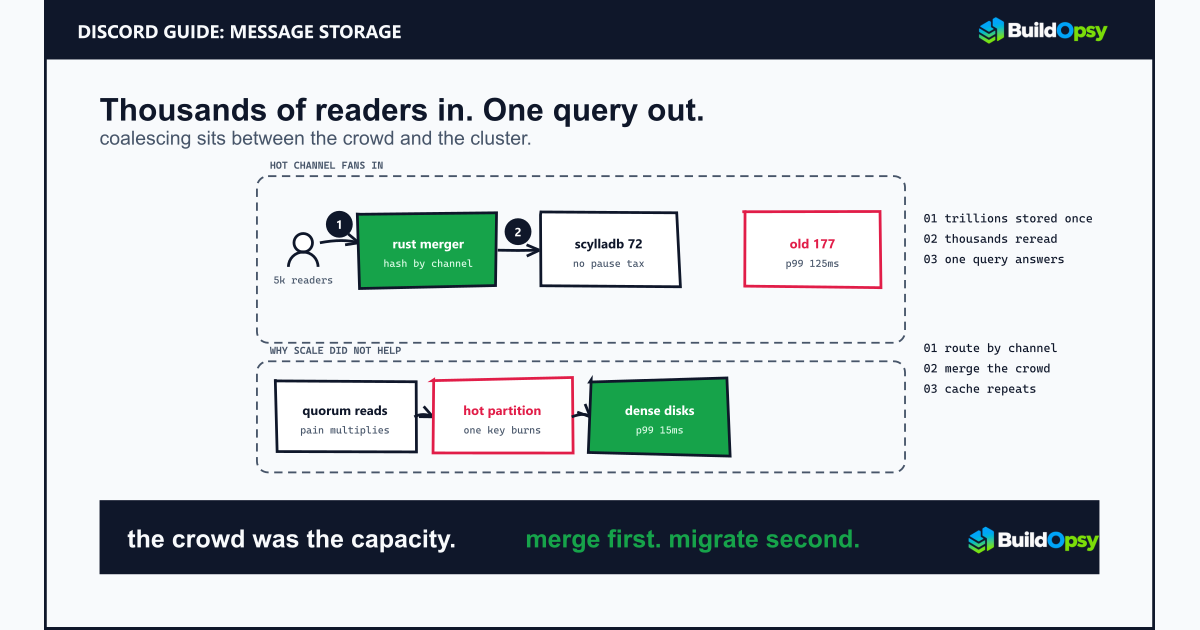
Exactly! The interesting part is that coalescing and hot partition mitigation solve different problems. coalescing can reduce duplicate reads when requests overlap but it doesn't automatically redistribute traffic that's concentrated on one partition. Treating those as separate bottlenecks is important when reasoning about the architecture.
StackShortlist
Proof Over Promises.
The line about aggregate cluster capacity not being the same as capacity for a hot partition is the useful takeaway here. The 177 to 72 node number gets quoted a lot, and the workload part usually gets skipped. Section 3 is a fair caveat too. Coalescing only pays off when many requests overlap on the same data, so a quiet channel gets little from it.