Discussion on "How to Modernize a VM-Based Application to Kubernetes on Multi-Cloud Infrastructure: Five Paths, a VM-to-Kubernetes Map, and a Readiness Scorecard" | Hashnode
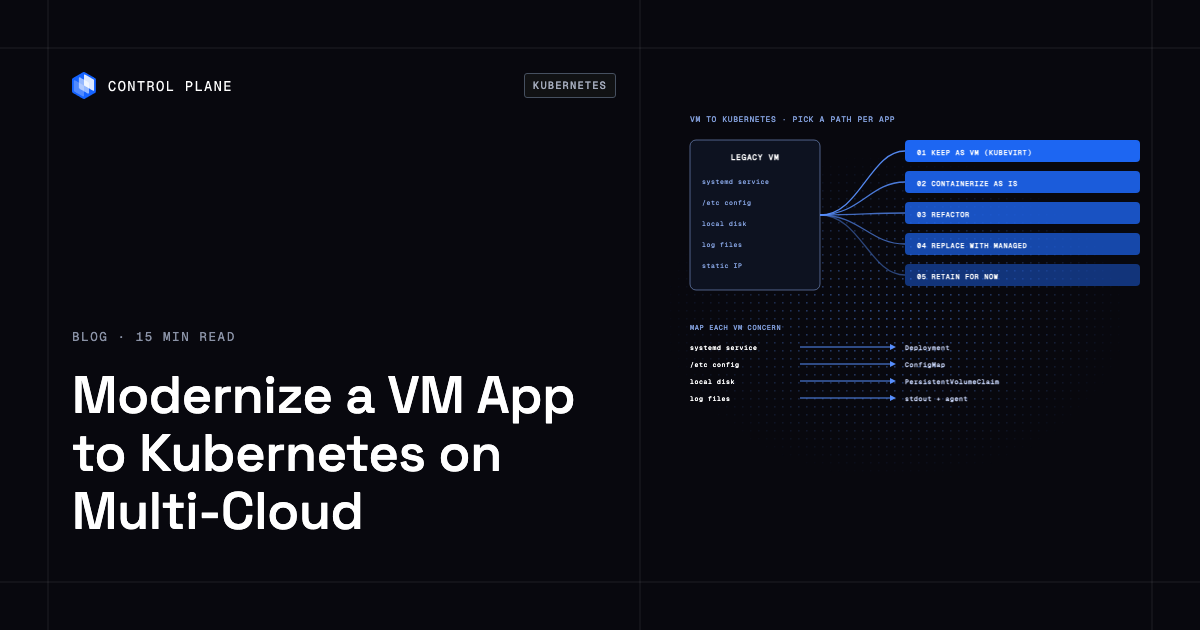
The per-application framing is the most useful part of this. A lot of migration plans fail because they choose one path for the whole portfolio, then discover that the app with host-based licensing or a long startup time does not fit it. Keeping some workloads as VMs inside Kubernetes for a while is a perfectly reasonable answer, not a failure.
I would add one signal to the scorecard: whether the team already has shared observability. Moving from one VM per app to a cluster changes where problems show up, and teams without central metrics and logs tend to lose the debugging habits they had on the VMs.
One of the case files at Ascendra Ventures followed that order. An IT services firm was running one VM per application on a hyperconverged cluster, with no shared observability and nothing self-service. They moved onto Kubernetes on the hardware they already had, and Prometheus, Grafana and an Elasticsearch, Fluentd and Kibana stack were part of the platform from the start rather than added later. The proof point was simple: they ran their own company on it before offering it to anyone else.
In the readiness scorecard, how do you weight team familiarity against the technical signals when they disagree?
Ascendra Ventures
The per-application framing is the most useful part of this. A lot of migration plans fail because they choose one path for the whole portfolio, then discover that the app with host-based licensing or a long startup time does not fit it. Keeping some workloads as VMs inside Kubernetes for a while is a perfectly reasonable answer, not a failure.
I would add one signal to the scorecard: whether the team already has shared observability. Moving from one VM per app to a cluster changes where problems show up, and teams without central metrics and logs tend to lose the debugging habits they had on the VMs.
One of the case files at Ascendra Ventures followed that order. An IT services firm was running one VM per application on a hyperconverged cluster, with no shared observability and nothing self-service. They moved onto Kubernetes on the hardware they already had, and Prometheus, Grafana and an Elasticsearch, Fluentd and Kibana stack were part of the platform from the start rather than added later. The proof point was simple: they ran their own company on it before offering it to anyone else.
In the readiness scorecard, how do you weight team familiarity against the technical signals when they disagree?