Atlassian consultant and Forge developer at LeanZero. We do Data Center to Cloud migrations and build Forge apps, and I write up what I learn at leanzero.net.
I started LeanZero because I saw an industry full of process-heavy companies charging enterprise prices for work that could be done faster, leaner, more honestly. The Atlassian ecosystem shouldn't need a small army and a six-figure budget to get things done right. I hold Atlassian Certified Administration Expert status: ACP-120, ACP-220, ACP-420 and ACP-520, covering Jira, Confluence, Jira Service Management and cloud org admin. Other certs: PSM I, SSM, AWS Cloud Practitioner. I specialize in Forge app development and run an AI-powered agentic workflow I built myself, so I can build across stacks without a dozen specialists. Cloud migrations are my bread and butter, from small teams to orgs with tens of thousands of users. The MCP Doc Processor came from a simple frustration: nothing on the market fit, so I built it. I'm not selling magic pixie dust. I'll tell you honestly what's possible, what's hard, and what you actually need. If you don't need to pay me, I'll tell you that too.
Markdown supported · ⌘↵ to post
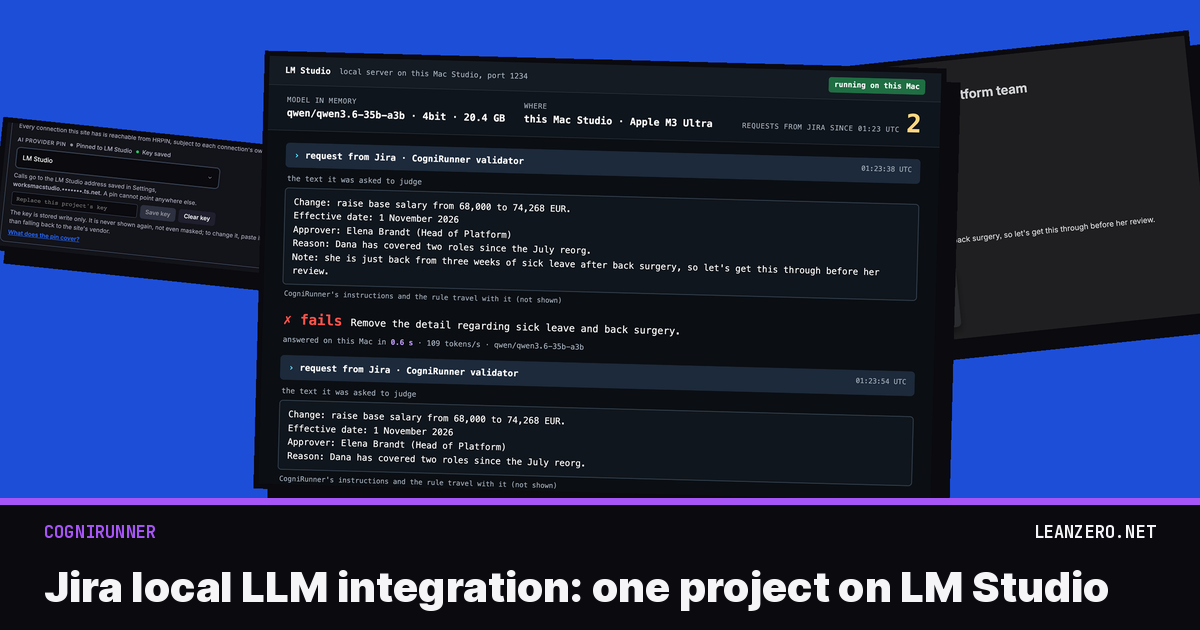
Really valuable write-up, especially the part about testing what happens when the local model fails or the wrong token is used. The example involving sensitive HR information highlights an important point: keeping AI processing local doesn't automatically guarantee data privacy if logs and fallback behavior aren't handled carefully. At Oglas AI, we believe practical AI solutions need to be built around security, reliability, and real business requirements not just functionality. Great to see these real-world implementation details covered so clearly!
Thanks. The logs and fallback path were the part I most wanted to get across, glad it came through.
Yunus Emre Vurgun
Really appreciated that you deliberately broke the token to show the FAIL-OPEN row instead of only showing the happy path. For a privacy check like the HR example, fail-open means a Mac Studio reboot quietly lets sensitive requests through, so I'd be tempted to make that one project fail-closed and just block Send for Review with a clear message. How has the 35B-A3B MoE been on latency for the validator step? Keeping the model pinned in memory (no idle unload in LM Studio) seemed to matter a lot for first-request times in my experience.