Feed
Discussion
KeptTools: browser-only developer tools that don’t upload your paste
KeptTools: browser-only developer tools that don’t upload your paste I build a lot of small utilities into my day: format JSON, clean SQL, peek at a JWT, encode Base64, generate a hash, compress an im
Responses
Markdown supported · ⌘↵ to post
Kamran Khan
Full-Stack Web Developer (React.js + Laravel) | Dashboards, SaaS Apps & Management Systems for Global Clients
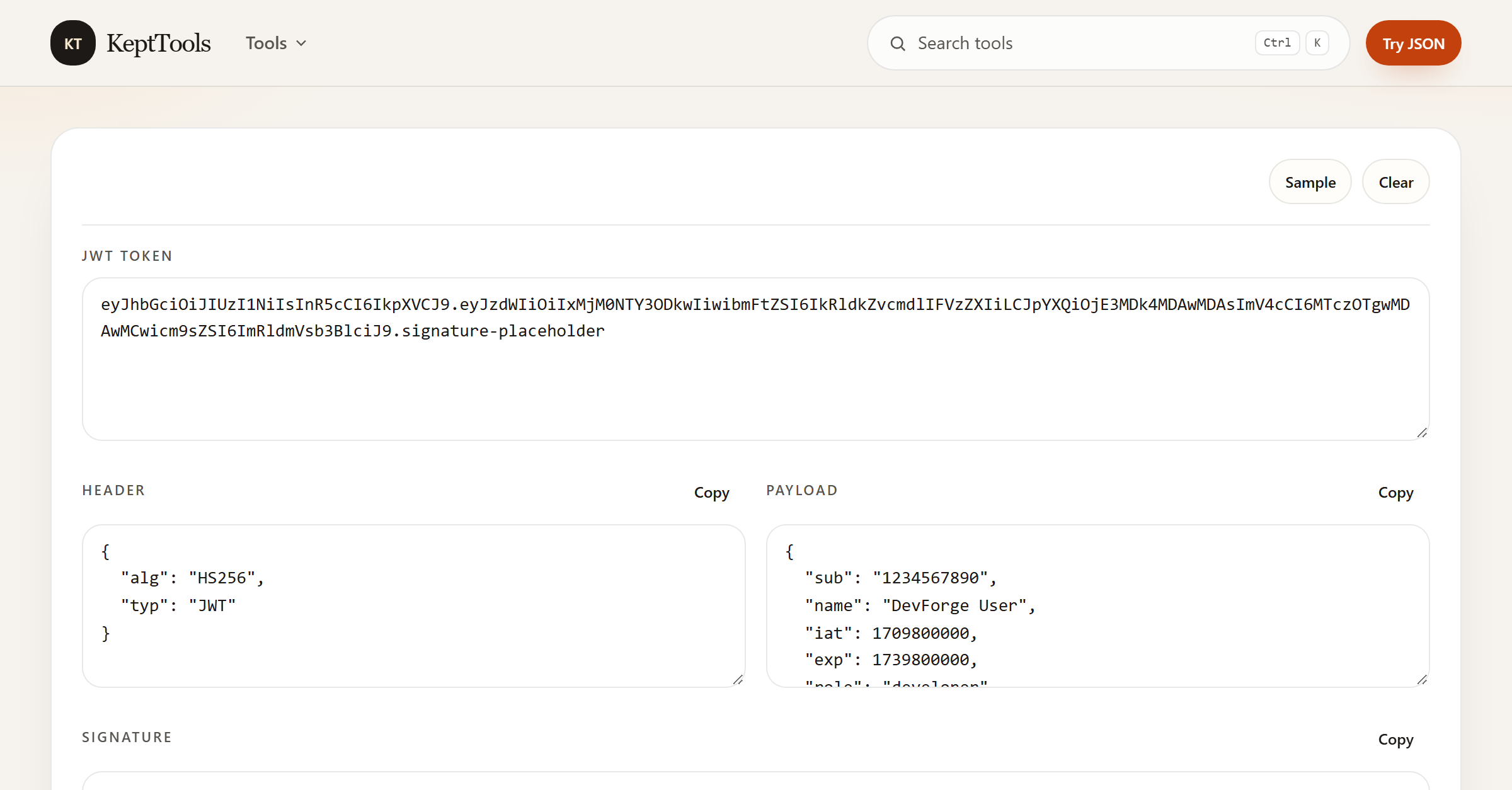
I like the threat model, but I'd be careful how far the privacy claim goes. Browser-only stops network exfiltration, not a malicious extension or a shared machine reading the DOM, so "nothing leaves your browser" is true in a narrower sense than it sounds. One concrete gap: a JWT decoder that decodes without verifying the signature gives false confidence. Anyone can mint a token with admin claims and a valid-looking payload, and a decode-only view can't tell you it's forged. If you ever add optional signature verification with a pasted secret, that's the feature that would make me actually trust it for staging tokens.