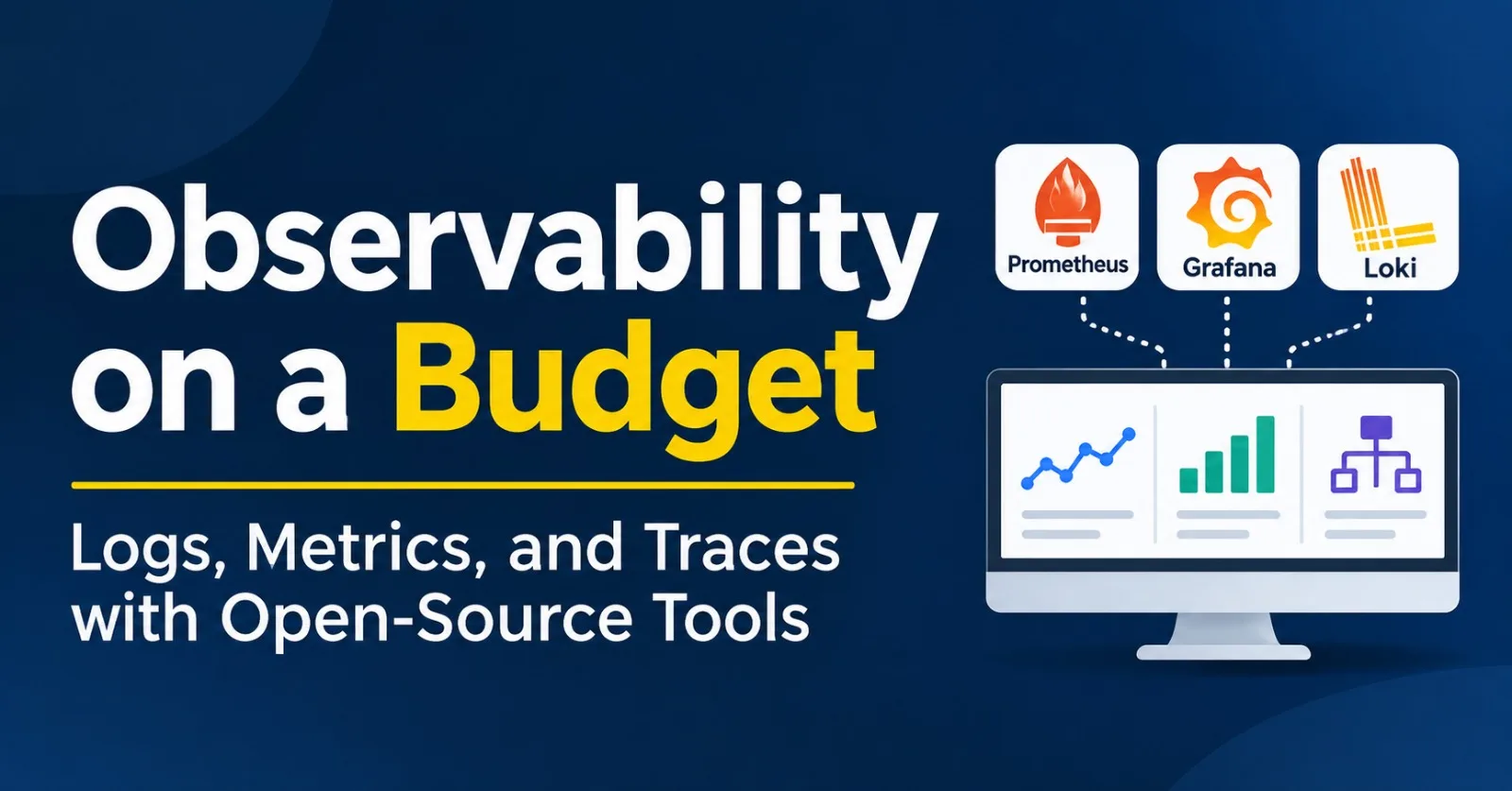
Observability on a Budget: Logs, Metrics, and Traces with Open-Source Tools
Observability bills have a reputation for surprising people. A few services, a forgotten debug log level, and one metric labeled with a user ID can turn monitoring into a real expense. Open-source too
Responses
Markdown supported · ⌘↵ to post
One thing I’d emphasize is that observability cost should be measured against the cost of diagnosing an incident, not just the volume of telemetry collected. Aggressive sampling can save money, but if it removes the context needed to reconstruct a failed request, the savings can quickly disappear.
At IT Path Solutions, we see this as an important part of building production-ready systems: correlate logs, metrics, and traces around critical workflows, while keeping high-cardinality identifiers out of metric labels. I’d also make sure sampling preserves error and slow traces across service boundaries. The goal isn't to collect everything; it's to retain enough context to explain what went wrong when it matters.