AI engineering, agentic memory, machine learning, and system design at scale.
I work on AI systems and the infrastructure they actually run on: agentic architectures, memory for agents, retrieval, and the graph and data layers that keep model output grounded in something real. Formerly at Neo4j. I also write and teach the systems side that most AI content skips, from distributed systems and databases to the design decisions that decide whether a model ever reaches production. I run Total Technology Zonne on YouTube and I am building systemdesign.academy, an interactive course on system design, machine learning, and AI engineering, covering the parts most tutorials leave as an exercise for the reader. Mock interviews and prep packs: topmate.io/roni
Markdown supported · ⌘↵ to post
Ahmet Özel
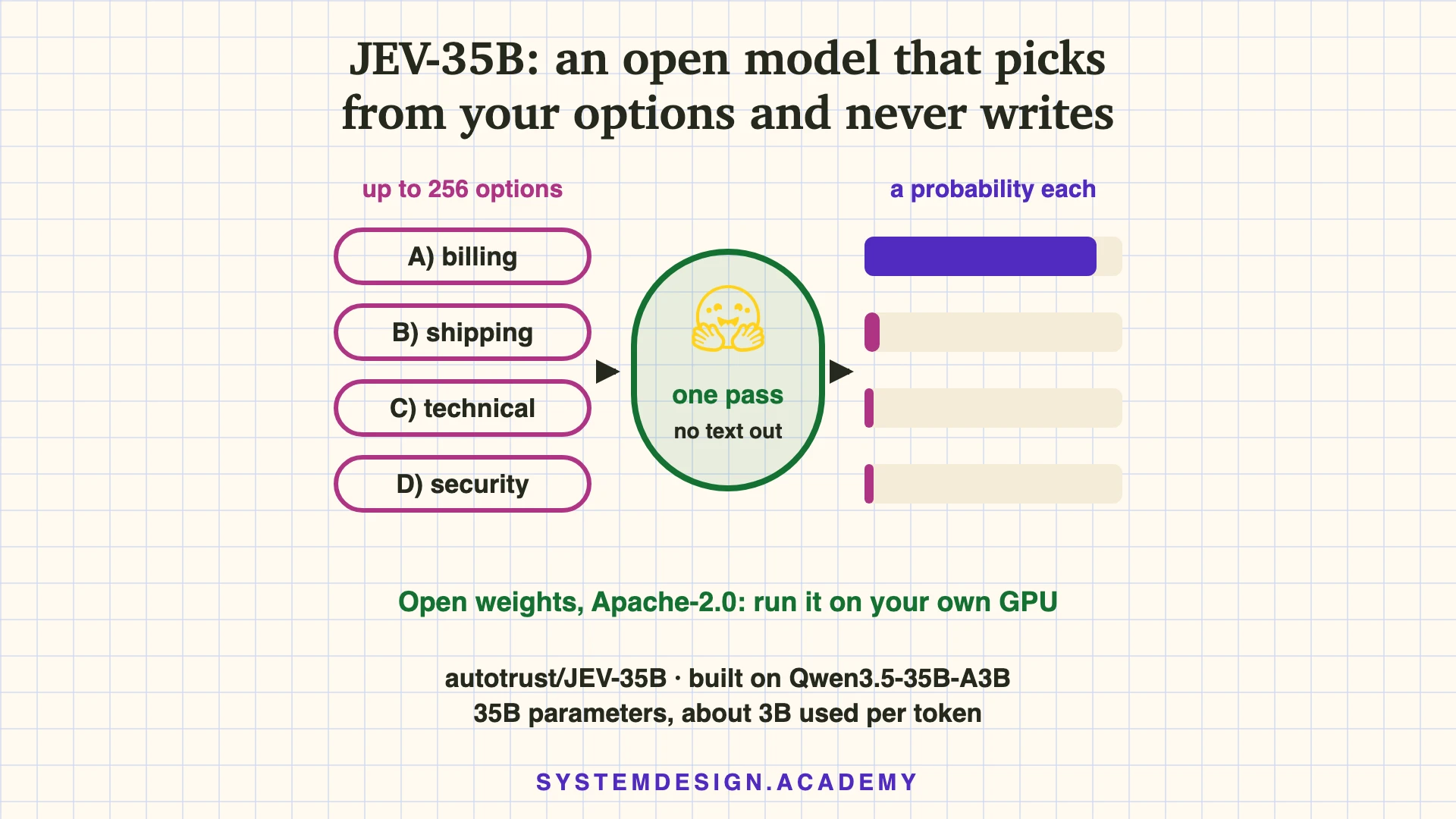
Reversal is a useful cheap check, but with four queues it only moves each queue between two positions. Billing at A and D never tells you what happens when billing occupies B or C. A model could pass that pair while retaining a strong preference for one of the untested positions.
Four cyclic rotations would place every semantic option in every slot without requiring all twenty-four permutations. I would map predictions back to queue names and report per-ticket consistency across those rotations alongside accuracy. Keeping the queue descriptions identical across layouts would also preserve the narrower comparison you explicitly call out.