Programmer Analyst Trainee at Cognizant
I'm a passionate software engineer and full-stack MERN developer who loves to turn ideas into scalable, user-centric applications. I have hands-on experience in building modern web solutions using React, Node.js, Express.js, MongoDB, following clean architecture and best development practices. My experience in the Cognizant Healthcare Product Consulting (HPC) program has given me hands-on exposure to SQL, PL/SQL, U.S. healthcare payer systems and TriZetto Facets, and has helped me to further develop my skills in working with enterprise software in domain-driven environments. I enjoy tackling complex technical problems, constantly learning, and building reliable applications that deliver business value.
Markdown supported · ⌘↵ to post
AI Tools Primer
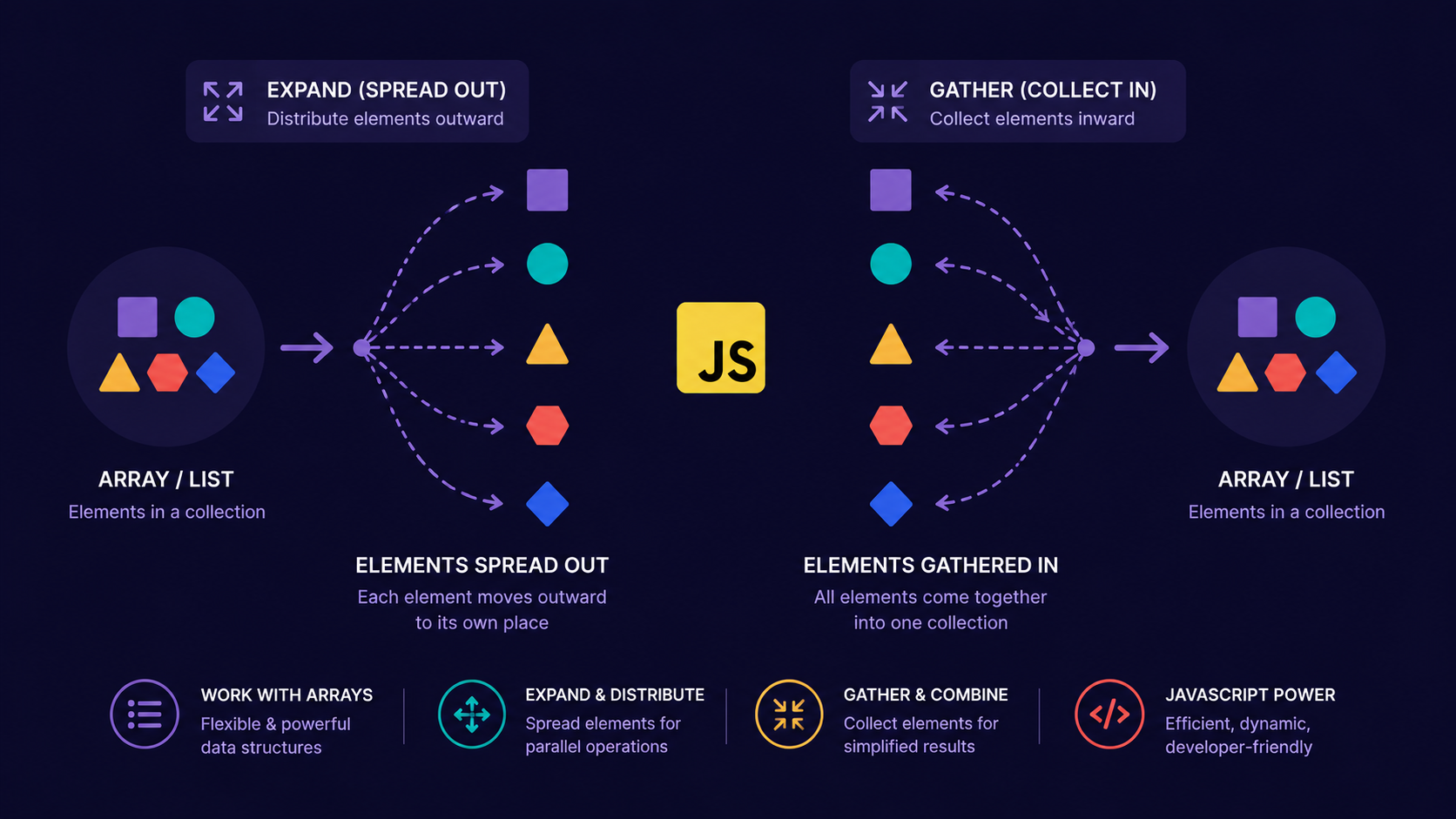
Good breakdown. One thing worth adding, because it catches people who use spread as a "copy" operator: {...obj} copies own enumerable properties only. The prototype is not carried over, so {...new Date()} gives you {} and {...someClassInstance} loses every method, since methods live on the prototype and not on the instance. Getters are evaluated at spread time and become plain values, and anything non-enumerable simply disappears.
And on the spread-as-arguments side: Math.max(...arr) is elegant right up until arr is large. Every element becomes a real argument, so on big arrays you hit RangeError: Maximum call stack size exceeded, and the exact threshold is engine-dependent rather than specified. arr.reduce((a, b) => Math.max(a, b)) is the boring version that never blows up.