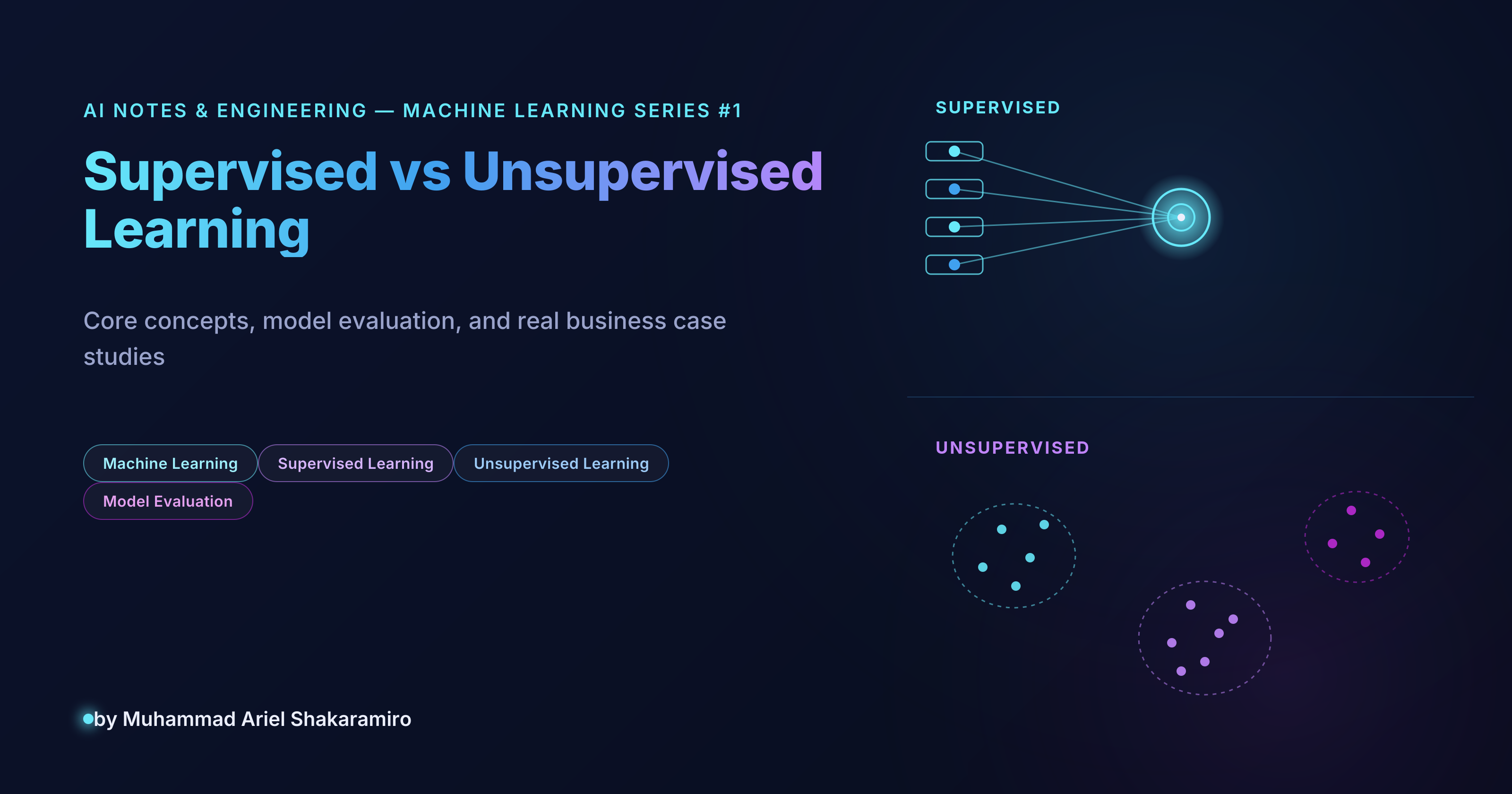
Machine Learning from Scratch: Supervised vs Unsupervised Learning (and How to Tell If a Model Actually Learned)
by Muhammad Ariel Shakaramiro Whenever people hear "Machine Learning," the mental image often jumps straight to robots or AI that "thinks for itself." The reality is much simpler: a computer learns pa
Responses
Markdown supported · ⌘↵ to post
Good structure, and the how to tell if a model actually learned part is the half that people skip. One thing worth adding to the evaluation section while it is still fresh in study notes: a strong test score is only meaningful if the test set could not have influenced any decision you made. Choosing a threshold, picking features or stopping training based on test performance leaks information, and the resulting number is optimistic in a way no amount of confusion-matrix analysis will reveal. That is what the separate validation split is for, and it is the discipline that survives long after the specific algorithms in a course change. The unsupervised side has a quieter version of the same trap: cluster quality metrics tell you the clusters are compact, not that they correspond to anything a person cares about.