Thanks — that’s a really useful rule of thumb.
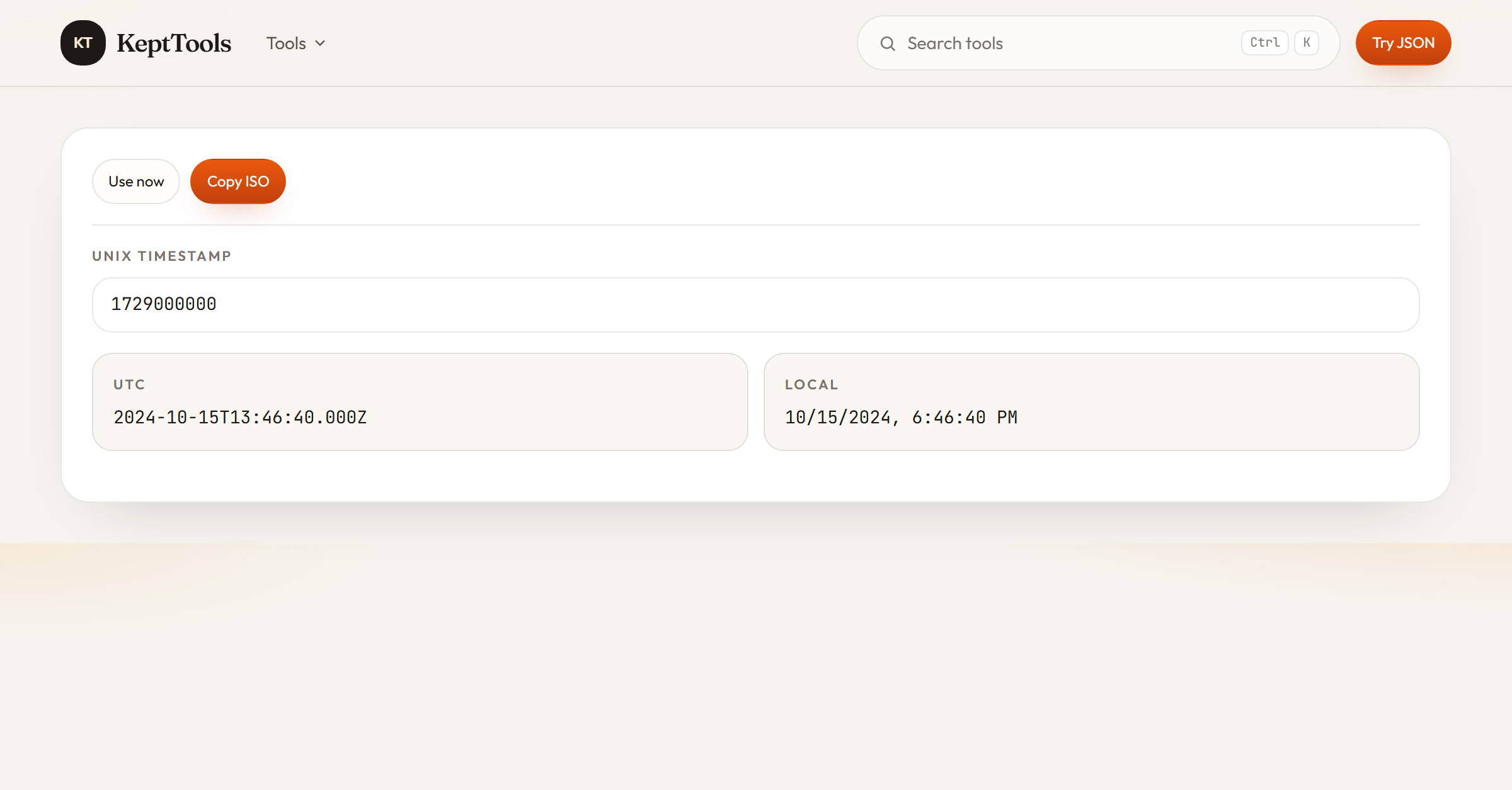
KeptTools already treats 10-digit values as seconds and 13-digit as milliseconds, and showing UTC + local side by side was exactly to avoid those “off by a few hours” bug-report mistakes.
Microseconds (16 digits) from Python/DB exports is a good call too — I’ve noted that as feedback. Appreciate you adding this.
StackShortlist
Proof Over Promises.
A quick rule of thumb: ten digits is almost always seconds and thirteen is milliseconds, at least for dates between 2001 and 2286. Sixteen digits usually means microseconds, which shows up in Python and some database exports. Showing both UTC and local time side by side, as your tool does, saves a lot of off by a few hours confusion in bug reports.