FeedDiscussion
The add-on pile-up is the one that got me on a first client build. The base server was cheap, then managed Postgres, backups, logs and an email service each added their own line, and none of it was on the estimate I gave. Now I put every service the app touches in a sheet before picking a host. Did you find egress or the managed add-ons hurt more for small apps?
The egress section is the one I would put first for any startup, because it is the only cost that grows with success and also with leaving. A useful habit is to tag every bucket and load balancer by feature from day one, so when the bill doubles you can see which feature did it instead of arguing about it in a meeting. Have you seen startups actually negotiate egress down, or is moving traffic behind a CDN still the only lever that works?
iin1005h1328
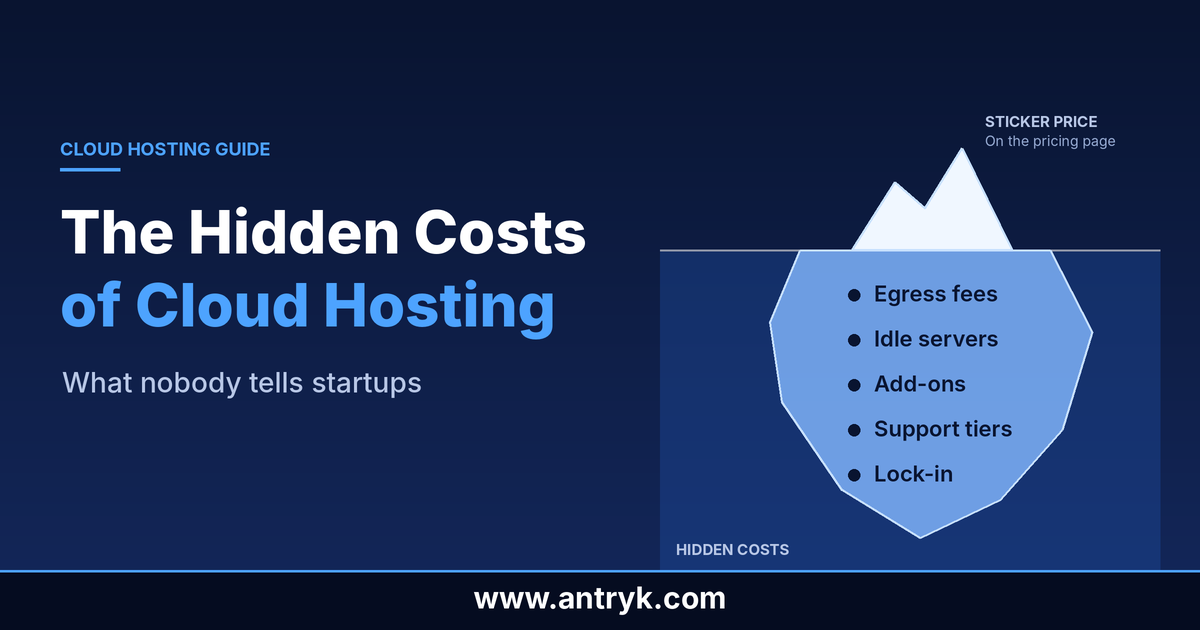
The pattern in your opening, a low monthly number at signup and an invoice double the estimate three months later, almost always has the same cause: the estimate priced the server and not the system. Managed Postgres, backups, logs, email, a NAT gateway, egress and a second environment each look small alone, and together they are often larger than the compute.
The habit that has saved us the most is writing the estimate as a list of every service the app touches, with a monthly cost and an owner, before choosing the host. It turns "how much will hosting cost" into a bounded question with a clear answer, and it makes the comparison between providers honest because you are comparing the same list.
I agree with the earlier response about tagging by feature from day one. One more addition: set a billing alert at a level that would surprise you, not one that would ruin you. By the time the ruinous number arrives, the decision that caused it is weeks old and hard to trace.