A tiny two-layer numeric example could make that connection concrete. Compute the loss once, perturb one early weight by a small amount, and compare the observed loss change with the derivative produced by the chain rule.
Then repeat with a saturated activation. The smaller gradient becomes something a beginner can inspect, while the distinction between computing a gradient and applying the optimizer update stays visible. It would extend the analogy without suggesting that an early layer directly observes the final mistake.
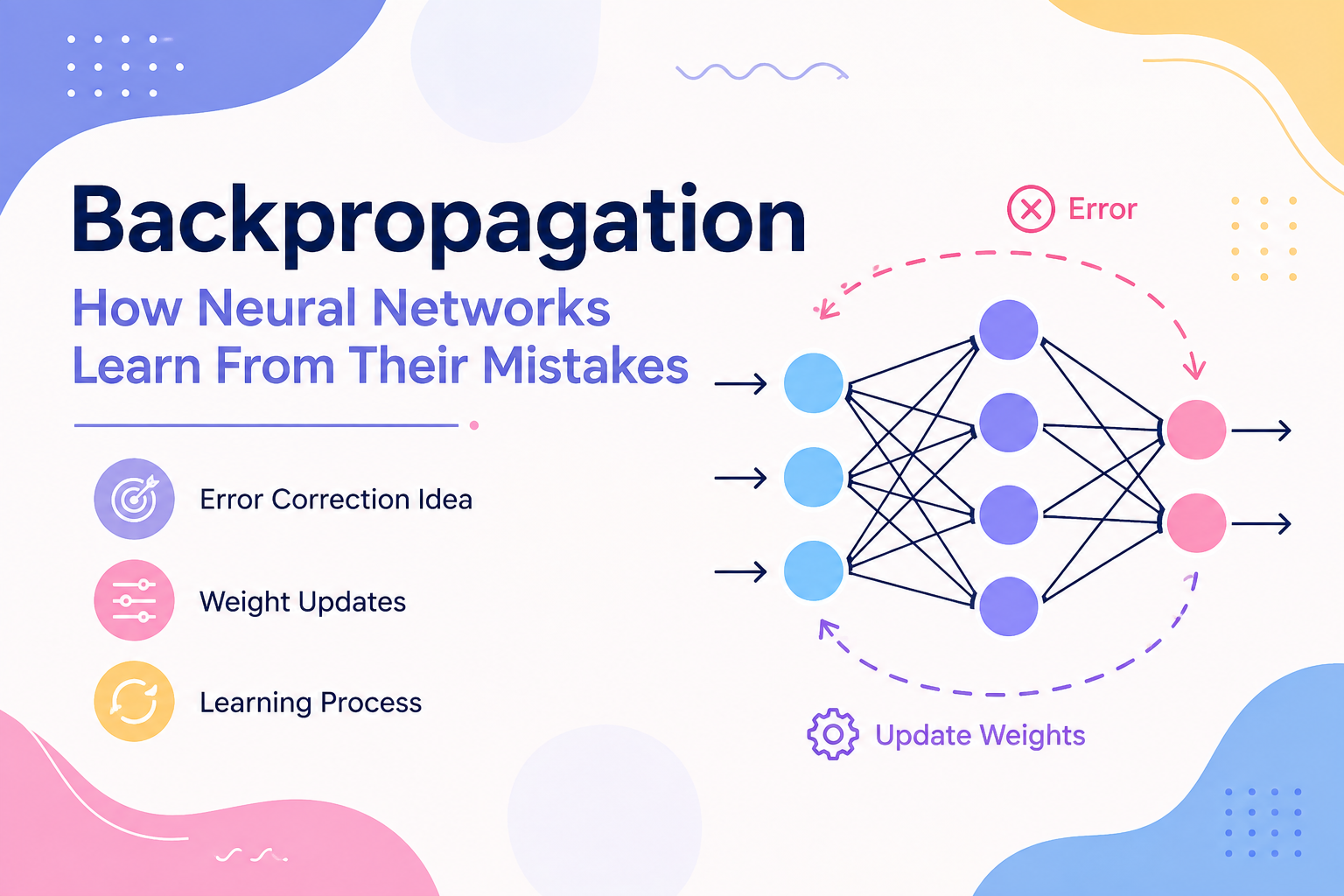
The basketball analogy carries the intuition well. The one place it quietly breaks is worth flagging for a beginner series: the shooter knows which direction to adjust because they watched where the ball landed, while a network in the middle layers has no direct feedback at all. Credit assignment is the actual hard part - working out how much each weight several layers back contributed to an error measured only at the output - and that is precisely what the chain rule is doing. Framing it that way also makes the later topics land more easily: vanishing gradients stop being a mysterious phrase and become the obvious consequence of multiplying many small numbers on the way back.