What it actually costs to move your email templates to another provider
A company I used to work for sent all of its transactional email through Mandrill (now Mailchimp Transactional). Password resets, invoices, reports, notifications. We used it for years and it worked,
Responses
Markdown supported · ⌘↵ to post
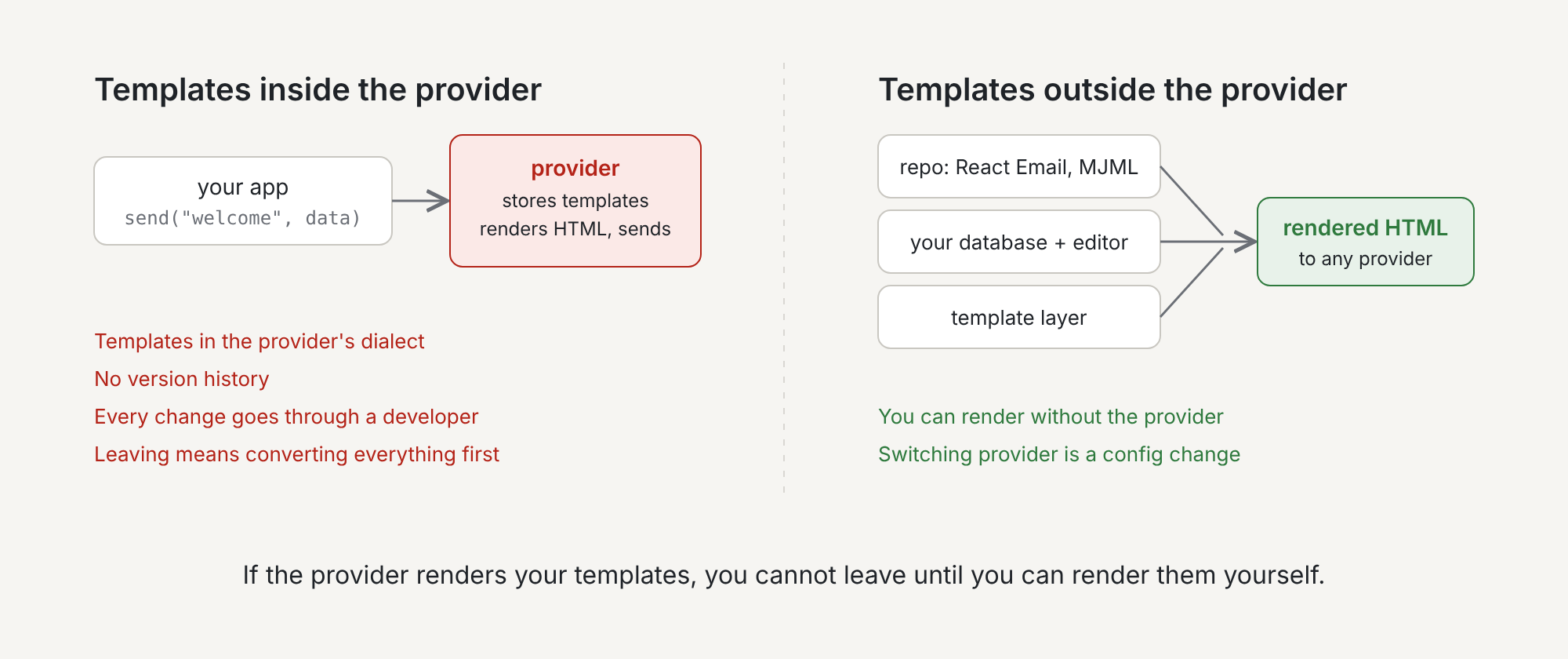
The real cost was never the Mandrill line item. It was developer hours on copy changes and hunting through a flat list with no history. That matches what we hear when teams want to leave a transactional provider.
The line that if the provider renders your templates you cannot leave until you can render them yourself is the decision rule. Templates in the repo, in your own database, or in a separate template layer are three different products. For a small team with a handful of templates, repo plus render-at-send is usually the honest choice, even if every copy change needs a deploy.
At Ascendra Ventures we treat the template location as part of scope on email and SaaS builds, not as a later cleanup. Changing provider should be a config change, not a conversion project.
If you have moved templates off Postmark or SES, what broke first: merge tags, conditionals, or the missing test payloads?