Web analyst and editor of Open Source Analytics. Privacy-friendly, self-hosted web analytics tested on real servers.
Web analyst and editor of Open Source Analytics. More than ten years in SEO and analytics. Writes editorial reviews of privacy-friendly, self-hosted and open-source web analytics for production use.
Markdown supported · ⌘↵ to post
Furqan Ashraf
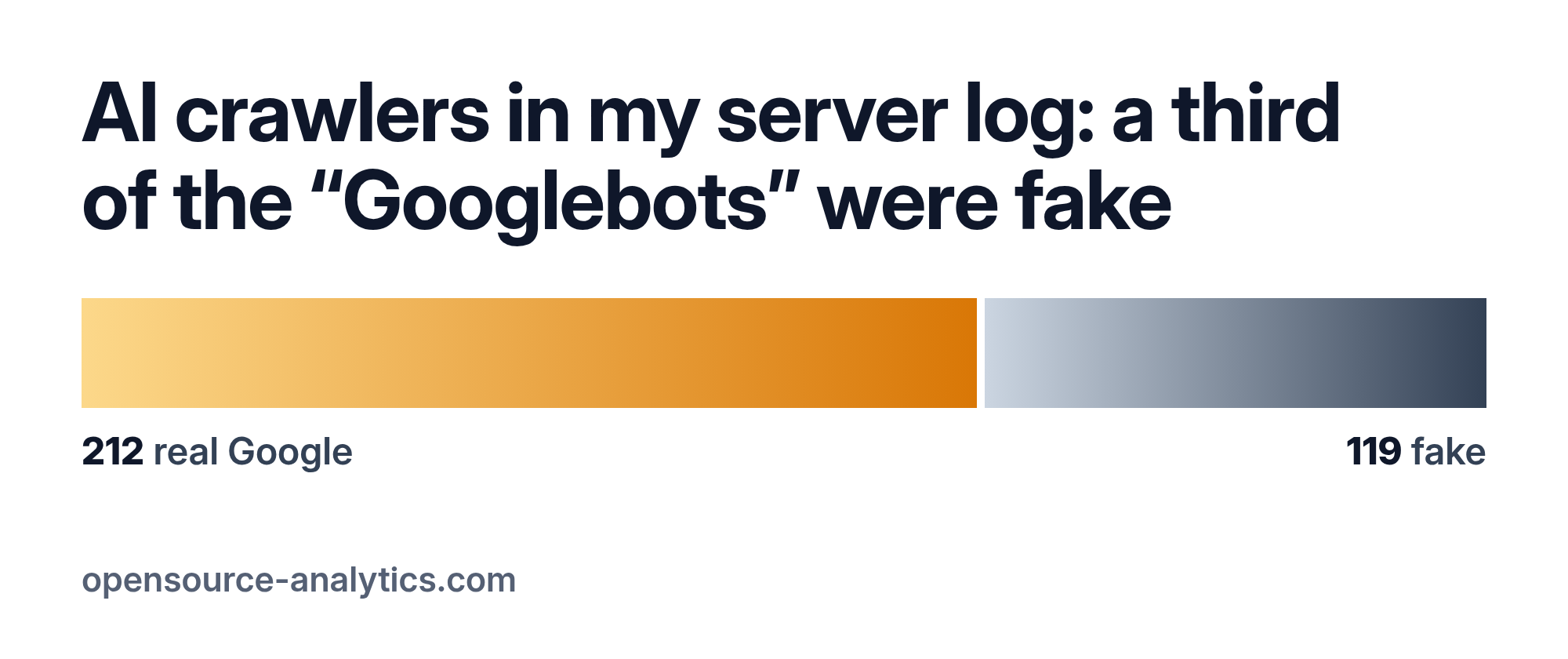
"Five of those servers used 30 bot names between them" is the most telling detail here. Reverse DNS works for the Googlebot claims, but it doesn't help with the ClaudeBot or ChatGPT-User spoofs, and per-vendor range lists drift over time. A quicker way to rerun this analysis is to dedupe the IPs from the log and send them all through one bulk call that tells you, per IP, whether it's a verified crawler and whose cloud it's on:
awk '{print $1}' access.log | sort -u | jq -R . | jq -s '{ips: .}' > ips.json curl -s -X POST "api.ipgeolocation.io/v3/security-bulk" \ -H 'Content-Type: application/json' -d @ips.jsonAny IP where the user agent claims a crawler but is_known_good_bot is false and cloud_provider_name is set is one of your fakes, whichever of the 30 names it used. The IP security APItakes up to 50k IPs per request, so two weeks of logs is a single call. I'd also like to know whether the .env probing started from the same five IPs or moved to new ones after the 403s.