FeedDiscussion
Agentic AI Beyond the Hype: Why the Boundaries Are Key in Deterministic and Non-Deterministic Behavior for Agents
Let’s imagine we are implementing deterministic behavior for agent systems using control techniques (harnessing). Suddenly, we observe that the agent's actions and responses begin to become clumsy, an
designednotmagic.hashnode.dev4 min read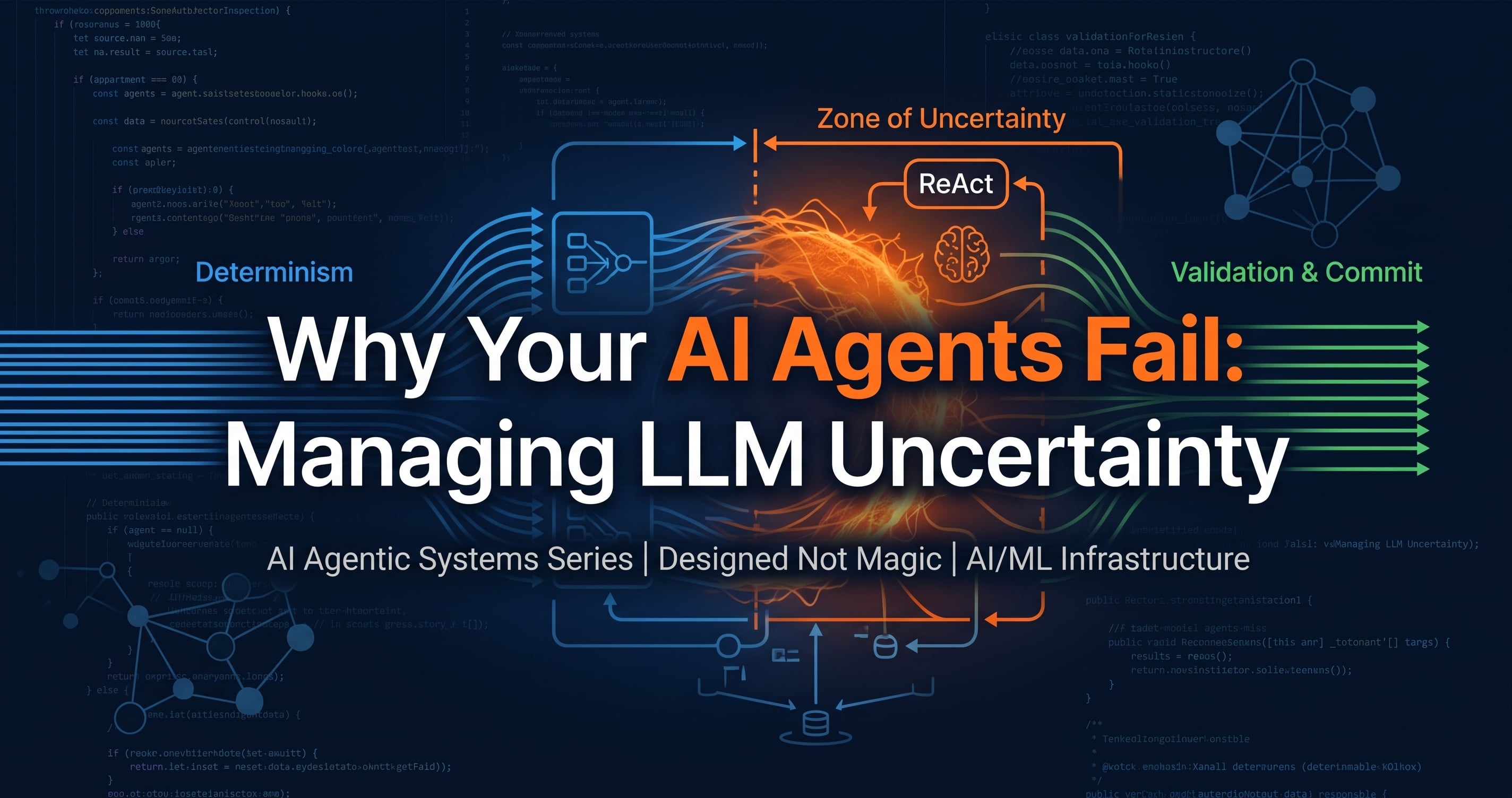
#agenticai#aiagents#softwarearchitecture#systemdesign#aiinfrastructure#distributedsystems#softwareengineering#machinelearning#llms#artificialintelligence#generativeai#designednotmagic
Joselo Martinez
Thank you so much! Coming from a team that develops a production-grade SaaS like BotSailor, this means a lot to me. Managing omnichannel state (WhatsApp, Telegram, etc.) must make balancing the line between deterministic and probabilistic behavior incredibly complex. If a sales bot "hallucinates" a workflow, the impact on the business is immediate. I’m really looking forward to reading your series on "Agent AI in Production" to see how you handle state persistence. Cheers!