Feed
Discussion
Military Assets Detection System Edge Deployment Over Raspberry Pi
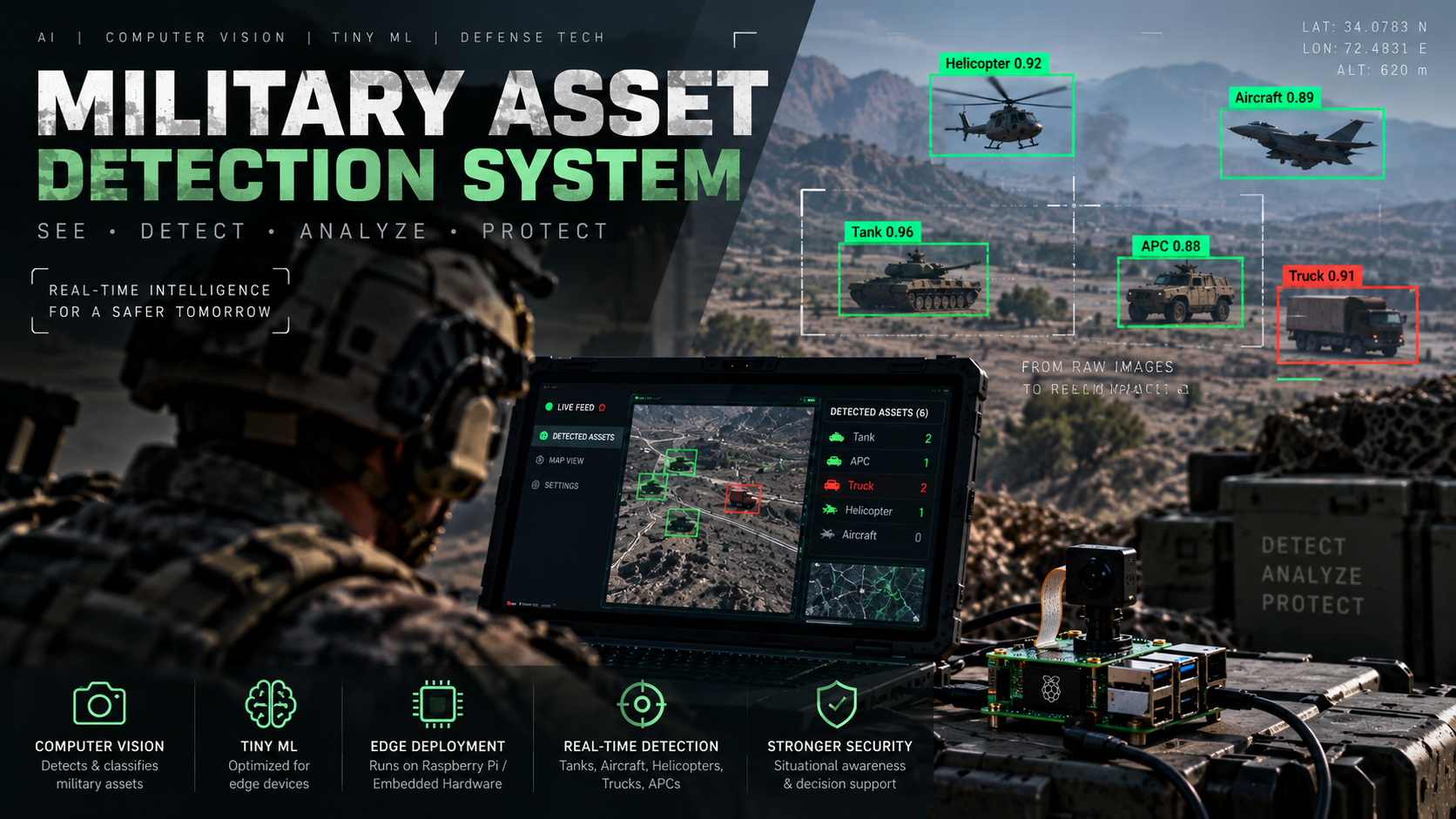
I Taught the Miniature Computer to Spot Tanks and Soldiers in Real Time, Here's How This summer, during my research internship at NIT Delhi, I set out to build something that sounded, on paper, way ab
Responses
Markdown supported · ⌘↵ to post
Humans are bad at staring at screens is the right problem statement, and it also sets the metric: for a monitoring aid, recall matters far more than precision, because a missed object is the failure the system existed to prevent while a false alarm costs a glance. That asymmetry should drive the confidence threshold, and on a small edge model it usually means accepting more false positives than a benchmark table would suggest is optimal. Worth being explicit about the class balance too - a surveillance feed is mostly empty frames, so overall accuracy is dominated by correctly seeing nothing, and per-class recall on the rare classes is the only number that means anything. On the Pi side, the constraint people underestimate is thermal rather than raw compute: sustained inference throttles, so the frame rate you measure in a two-minute test is not the one you get after an hour in an enclosure. Also curious whether you tracked across frames - even simple tracking turns per-frame flicker into stable detections and usually buys more perceived accuracy than a bigger model would.