the part that's easy to skip past is step 1, "hold it long enough to observe normal load." we treat that observation window as the actual gate, not just a waiting period -- pull evaluation telemetry for the whole window and confirm every evaluation landed on the variant you think won, not just that nobody complained.
a kill-switch flipped in the provider dashboard during an incident and never flipped back produces exactly the silent-default failure this post describes, except it looks like a clean removal, because the code default happens to match whatever got served that week by accident. the four-state inventory is the right fix for that -- "evaluated only through default or error paths" catches it -- but only if someone's actually looking at states three and four instead of just expired vs still-active.
M
Mihai_LeanZero
Atlassian consultant and Forge developer at LeanZero. We do Data Center to Cloud migrations and build Forge apps, and I write up what I learn at leanzero.net.
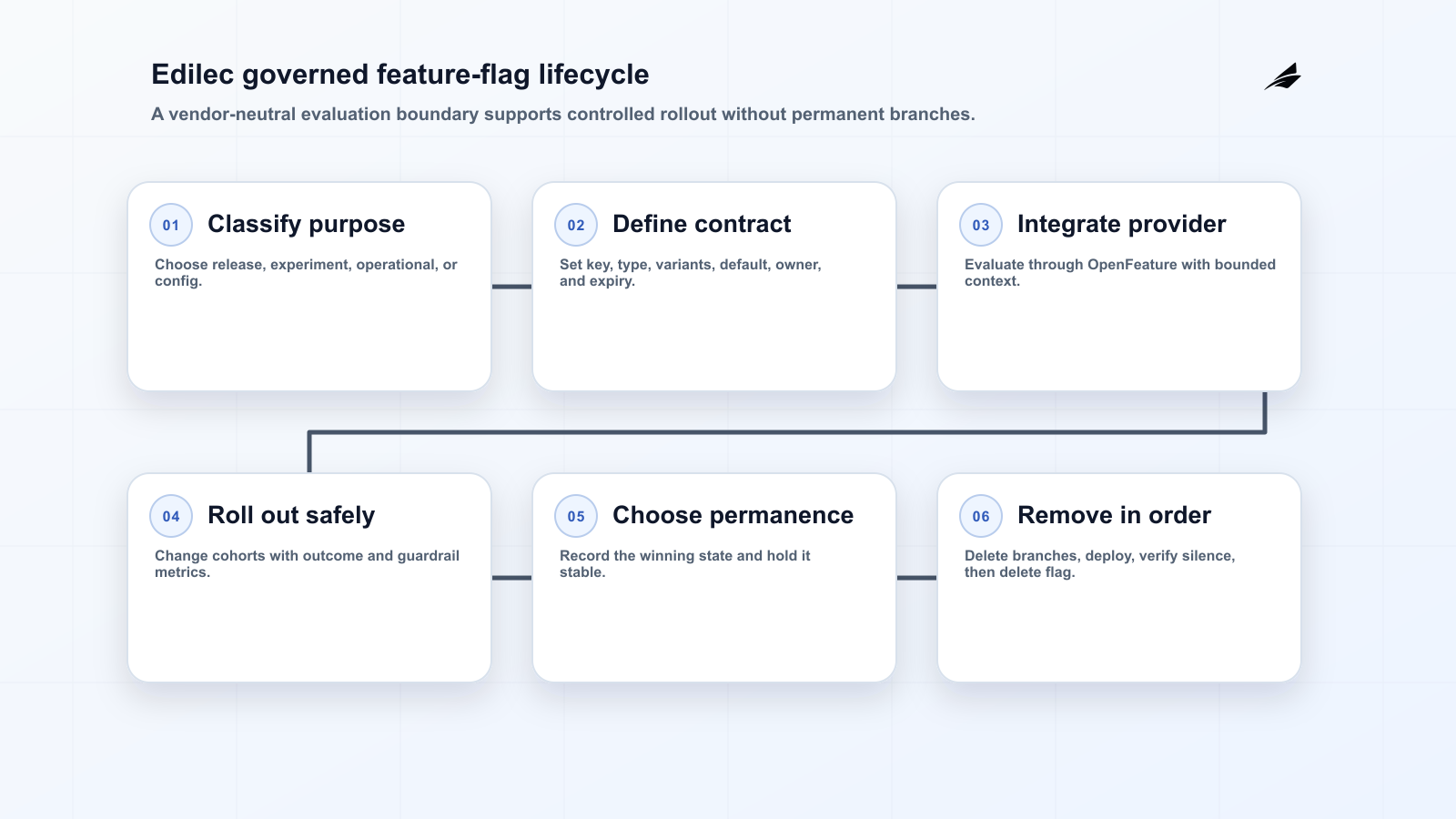
the part that's easy to skip past is step 1, "hold it long enough to observe normal load." we treat that observation window as the actual gate, not just a waiting period -- pull evaluation telemetry for the whole window and confirm every evaluation landed on the variant you think won, not just that nobody complained.
a kill-switch flipped in the provider dashboard during an incident and never flipped back produces exactly the silent-default failure this post describes, except it looks like a clean removal, because the code default happens to match whatever got served that week by accident. the four-state inventory is the right fix for that -- "evaluated only through default or error paths" catches it -- but only if someone's actually looking at states three and four instead of just expired vs still-active.