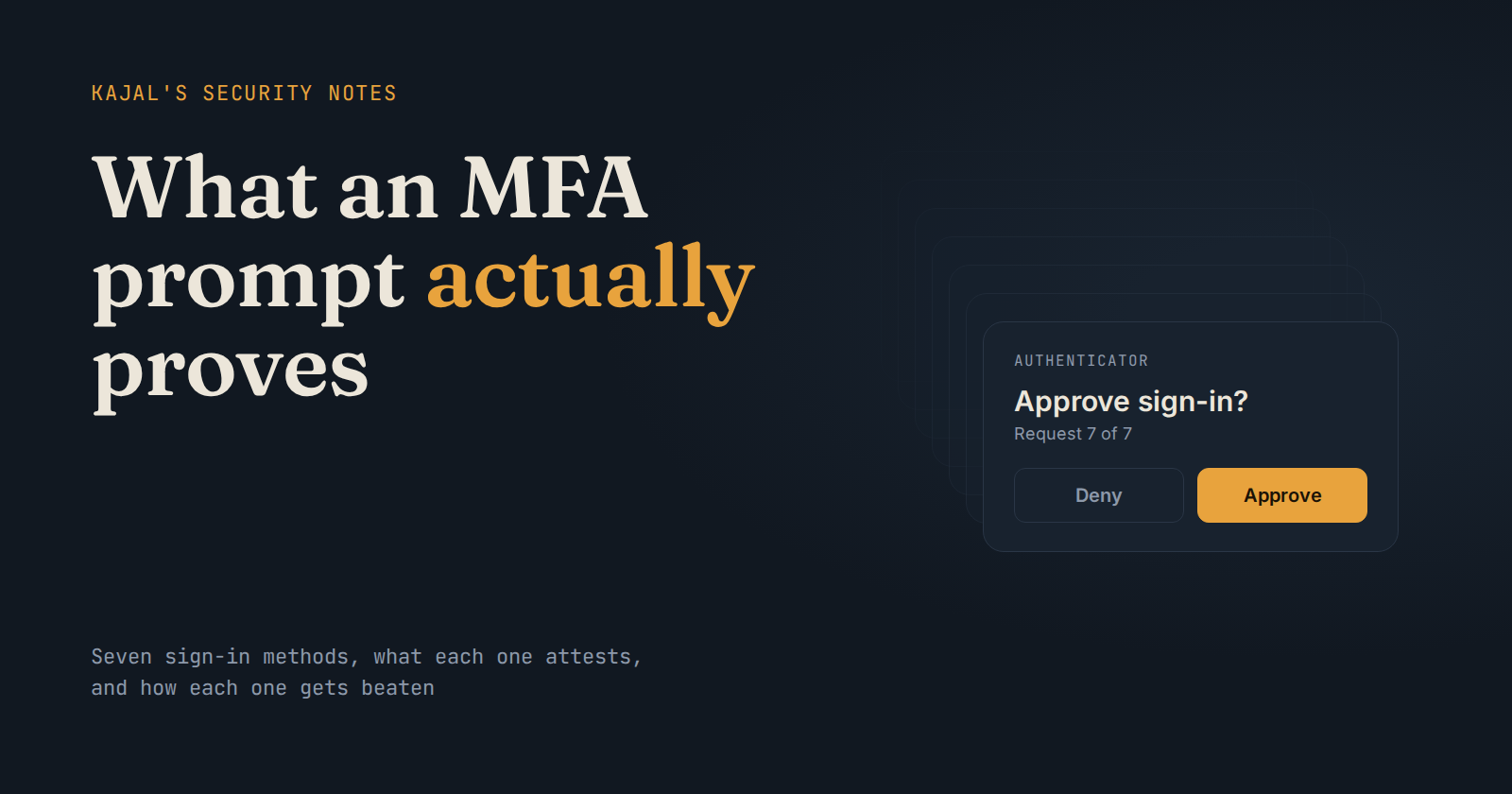
Framing MFA as "someone had this factor at this moment" is the right correction, because it says nothing about the session token that lives for hours afterward. Most account takeovers I read about now skip the prompt entirely: token theft, push fatigue approvals, or a helpdesk reset that re-enrolls a new factor. Phishing-resistant factors like passkeys close the first gap, but recovery and re-enrollment stay the soft spot. Which control do you think gets the most underinvestment: session binding, or verification at the helpdesk reset step?
The part I find most underinvested is that enrolling a replacement factor usually inherits the trust of the original enrolment without inheriting its verification. Plenty of organisations put real effort into identity proofing at onboarding, then hand a new factor to a voice on a phone.
indiainfranotes
Framing MFA as "someone had this factor at this moment" is the right correction, because it says nothing about the session token that lives for hours afterward. Most account takeovers I read about now skip the prompt entirely: token theft, push fatigue approvals, or a helpdesk reset that re-enrolls a new factor. Phishing-resistant factors like passkeys close the first gap, but recovery and re-enrollment stay the soft spot. Which control do you think gets the most underinvestment: session binding, or verification at the helpdesk reset step?
iin1005h0728