What 57 LLM Benchmark Runs on an AMD Instinct MI300X Taught Me About VRAM, Throughput, and Quantization
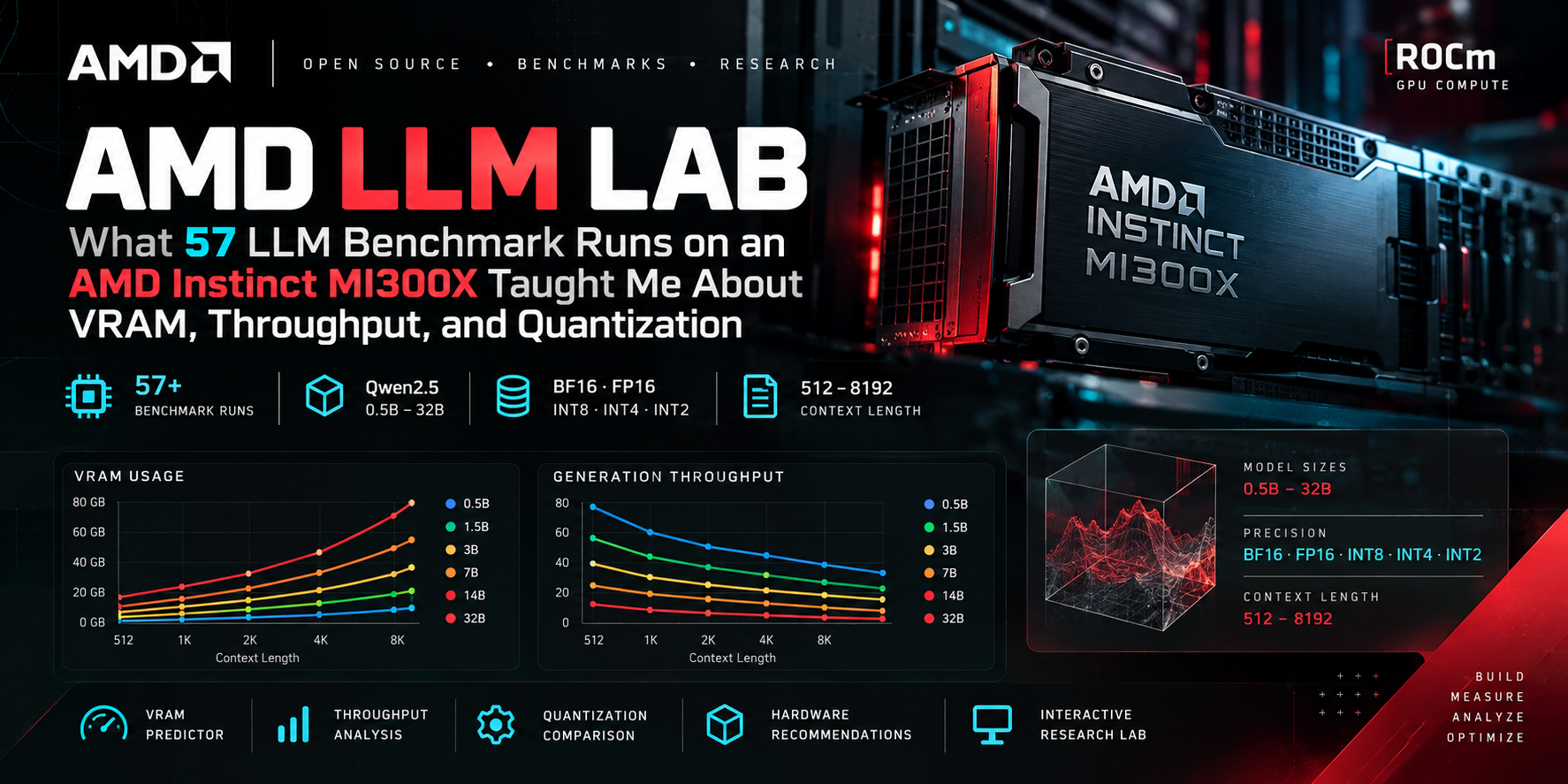
How much VRAM does a model actually need? How does model size affect generation speed? Does quantization always reduce memory? Does lower precision always make inference faster? I wanted to answer the
#ai#llm#machine-learning#machine-learning-models#machine-learning-algorithm#rocm#gpu#amd-mi300x#amd#amd-processor
Responses
Markdown supported · ⌘↵ to post
Ahmet Özel
AI Engineer. Computer Vision, RAG and LLM agents.
The separation between MEASURED, ESTIMATED, and INTERPOLATED results gives the 57-run dataset a clearer scope. For the predictive layer, I would add a grouped holdout alongside the held-out configurations you describe: reserve an entire model size or precision/backend combination, then compare its error with ordinary configuration-level validation.
Nearby context lengths from the same model can make a split look reassuring without testing whether the predictor handles a genuinely new regime. Reporting those two errors separately would help users judge a recommendation outside the measured grid. A clear 'outside coverage' signal would also prevent a precise-looking prediction from implying stronger evidence than the dataset supplies.