JJayesh SojitraOct 19 · 4 min readCloudTrail Explained: Knowing What Actually HappenedDay 20 said to start an investigation by asking what changed. CloudTrail is the service that answers that question for your AWS account. It records API activity, and most "mystery change" incidents enjayesh-sojitra.hashnode.dev
JJayesh SojitraOct 13 · 3 min readWeek 3 Recap: Networking, Delivery, and ReliabilityDay 16: Route 53 Explained Hosted zones hold your records. Alias records point a root domain at AWS resources, where CNAME can't. TTL controls how fast a change takes effect, so lower it before a migrjayesh-sojitra.hashnode.dev
JJayesh SojitraOct 13 · 4 min readMulti-AZ vs Multi-Region: What Each Actually Protects AgainstBoth terms get used as if they were two settings on the same dial. They're not. They cover different kinds of failure, and picking one without knowing which failure you're guarding against leads to eijayesh-sojitra.hashnode.dev
JJayesh SojitraOct 11 · 4 min read 5 AWS Mistakes That Cost Teams Real MoneyDay 12 covered how to trim a bill that's already running. This one is about the mistakes that create the surprise in the first place. None of them need advanced knowledge to avoid, only to know they ejayesh-sojitra.hashnode.dev
JJayesh SojitraOct 11 · 4 min read What Production Support on AWS Actually Looks LikeTutorials show building things. Production support is about the other situation: something that worked yesterday isn't working now, someone is waiting, and you need a method more than you need clevern1Ajayesh-sojitra.hashnode.dev
JJayesh SojitraOct 9 · 4 min readRoute 53 Explained: DNS Basics for AWSDNS translates a name people type (app.example.com) into an address machines use (an IP or an AWS endpoint). Route 53 is AWS's DNS service, and it's also a domain registrar and a health-checking tool.jayesh-sojitra.hashnode.dev
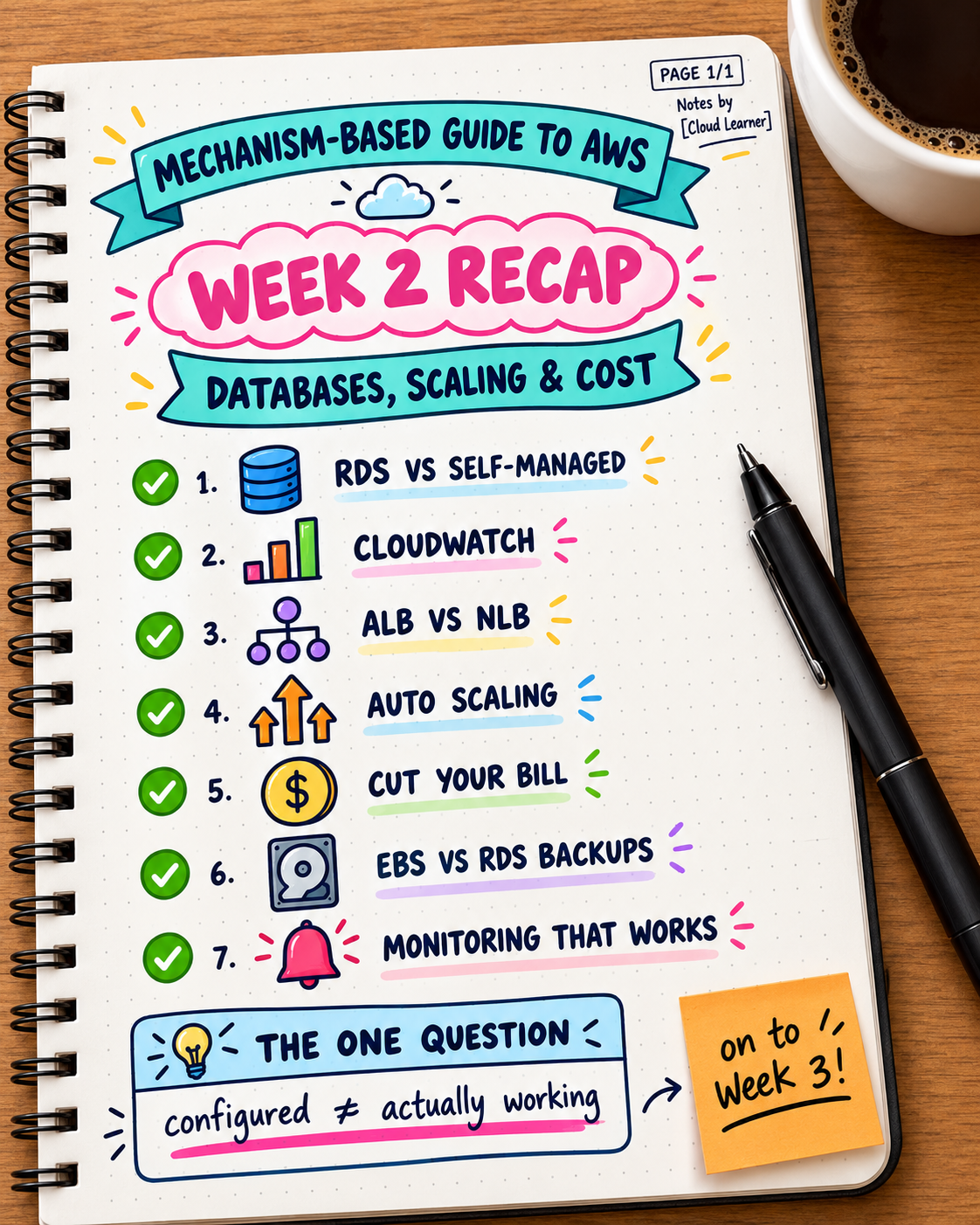
JJayesh SojitraOct 8 · 3 min readWeek 2 Recap: Databases, Scaling, and CostDay 8 — RDS vs Self-Managed Database on EC2 RDS handles backups, patching, Multi-AZ failover, and read replicas. Self-managing buys OS-level control and custom extensions, at the cost of owning all ofjayesh-sojitra.hashnode.dev
JJayesh SojitraOct 5 · 4 min readBuilding a Monitoring Setup That Actually Catches IssuesMost of this week built up the individual pieces — CloudWatch (Day 9), Auto Scaling (Day 11), backups (Day 13). Today's about assembling them into something that actually functions as a monitoring sysjayesh-sojitra.hashnode.dev
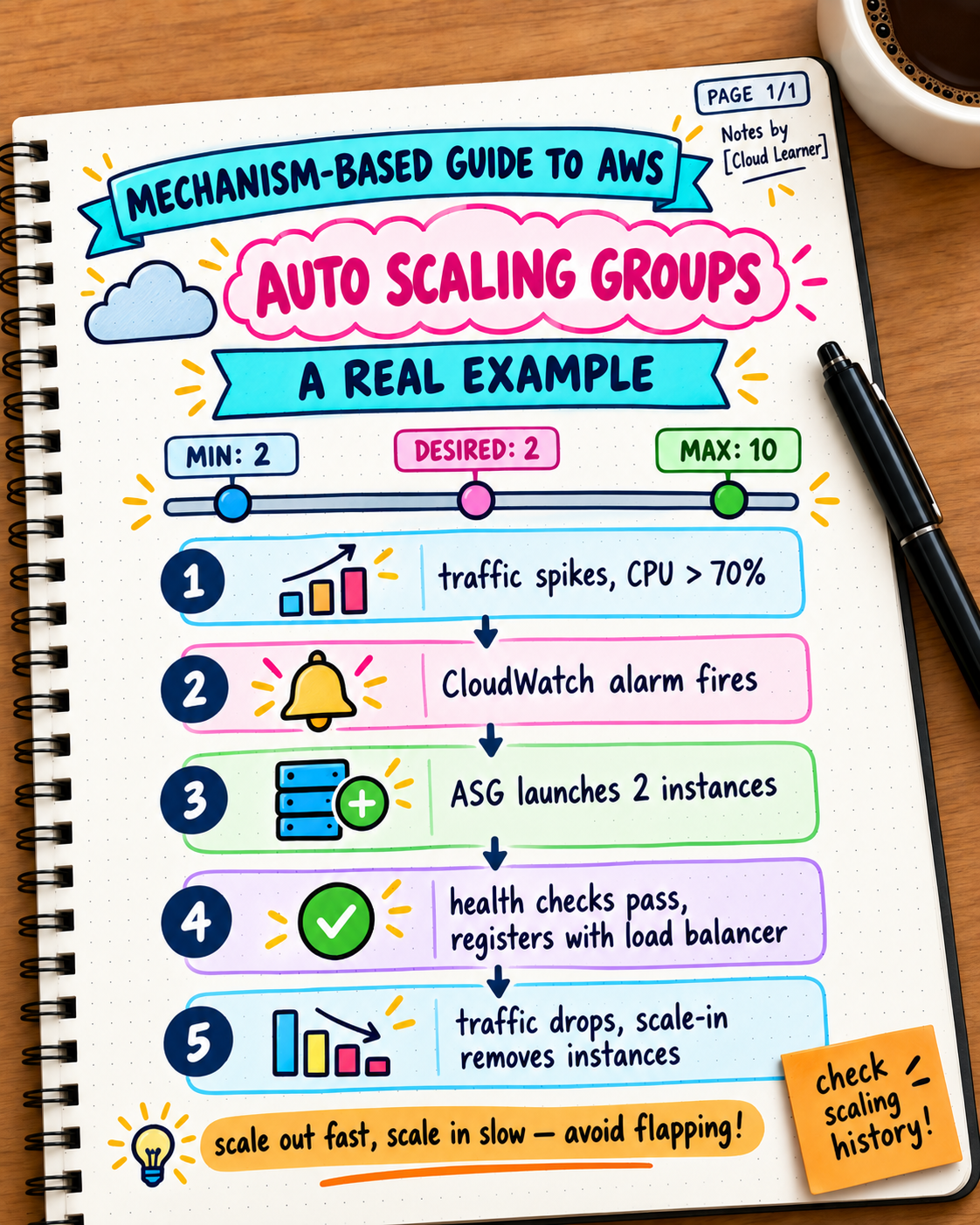
JJayesh SojitraOct 4 · 4 min readAuto Scaling Groups Explained With a Real ExampleAn Auto Scaling Group (ASG) automatically adjusts the number of EC2 instances running your application based on demand. The concept is simple; the actual configuration decisions are where teams eitherjayesh-sojitra.hashnode.dev
JJayesh SojitraOct 2 · 4 min readCloudWatch Explained: Metrics, Logs, and AlarmsCloudWatch is AWS's monitoring service, but "monitoring" covers three genuinely different things — metrics, logs, and alarms — that work together but solve different problems. Confusing them is why tejayesh-sojitra.hashnode.dev