Aug 16, 2025 · 2 min read · In today’s fast-paced business world, managing a multi-level marketing (MLM) network can be challenging. Tracking distributors, calculating commissions, and maintaining transparency manually often leads to errors and inefficiencies. This is where Bin...
Join discussion
Aug 15, 2025 · 3 min read · Checking whether a binary tree is symmetric is a classic recursion problem — and a great way to learn how to traverse a tree in mirrored fashion. In this post, we'll cover both the recursive and iterative solutions to LeetCode 101 with clear explanat...
Join discussionAug 2, 2025 · 2 min read · Binary search is a fundamental algorithm in Data Structures and Algorithms (DSA), renowned for its efficiency in searching sorted sequences. Unlike linear search, which scans each element sequentially and has a time complexity of O(n)O(n), binary sea...
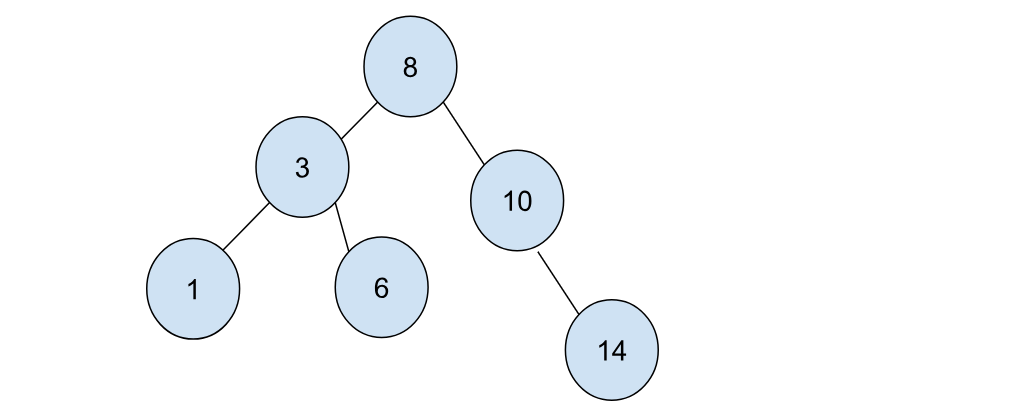
Join discussionAug 2, 2025 · 1 min read · What is a Binary Tree? Binary trees are fundamental data structures in computer science, forming the basis of many advanced algorithms and applications. A binary tree is a hierarchical structure where each node has up to two children, typically refer...
Join discussion
Jul 27, 2025 · 2 min read · Problem Given the root of a binary tree, determine if it is a valid binary search tree (BST). A valid BST is defined as follows: The left subtree of a node contains only nodes with keys less than the node's key. The right subtree of a node contains...
Join discussionJul 27, 2025 · 2 min read · Problem Given the root of a binary search tree and an integer k, return true if there exist two elements in the BST such that their sum is equal to k, or false otherwise. (link) Example 1: Input: root = [5,3,6,2,4,null,7], k = 9 Output: true Examp...
Join discussionJul 27, 2025 · 2 min read · Problem According to the definition of LCA on Wikipedia: “The lowest common ancestor is defined between two nodes p and q as the lowest node in T that has both p and q as descendants (where we allow a node to be a descendant of itself).” Example 1: ...
Join discussionJul 26, 2025 · 2 min read · Problem Statement Given the root of a binary tree, return the inorder traversal of its nodes' values. (link) Example 1: Input: root = [1,null,2,3] Output: [1,3,2] Explanation: Example 2: Input: root = [1,2,3,4,5,null,8,null,null,6,7,9] Output: [4,2,...
Join discussionJul 26, 2025 · 2 min read · Problem Statement Given a root node reference of a BST and a key, delete the node with the given key in the BST. Return the root node reference (possibly updated) of the BST. Basically, the deletion can be divided into two stages: Search for a node ...
Join discussion