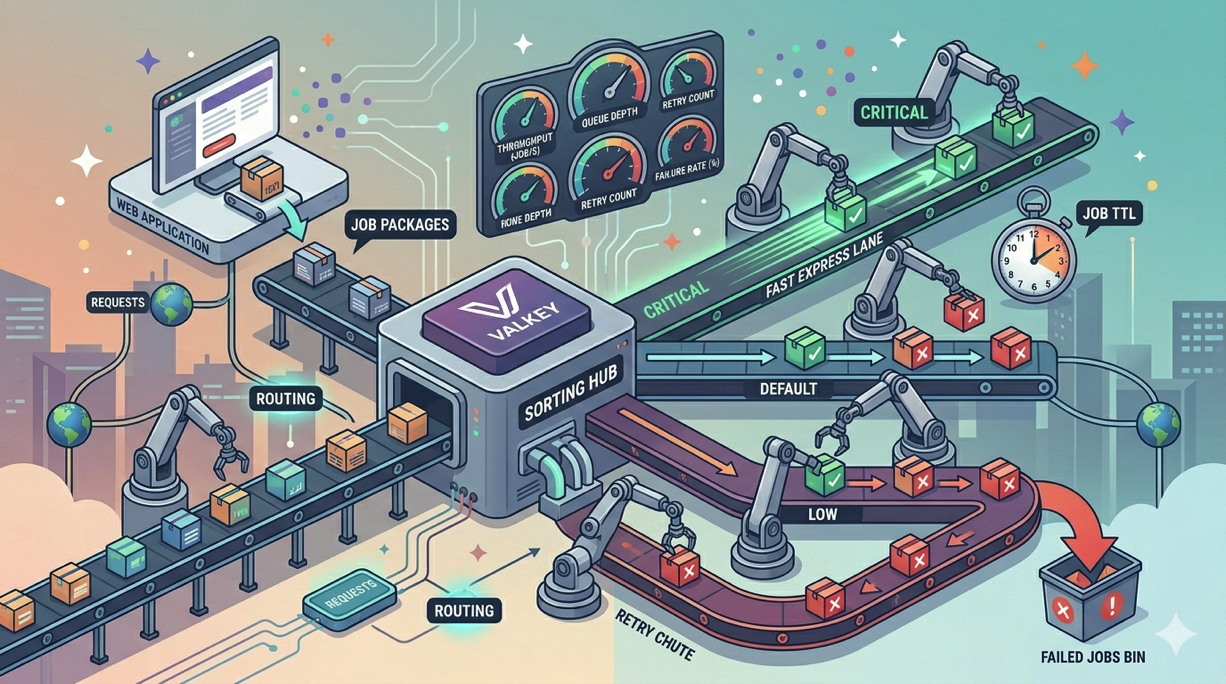
May 10 · 4 min read · Whenever you build a distributed microservices architecture, you inevitably hit the "Queueing Crossroads." For my recent project—Aerial Vision—I reached this exact point. I had a decoupled architectur
Join discussion
May 6 · 6 min read · Synchronous Architecture Consider a simple example of a user creating an application which has the following steps: User sign's up Insert User in DB Send a Welcome Email to the User Create Token
Join discussion
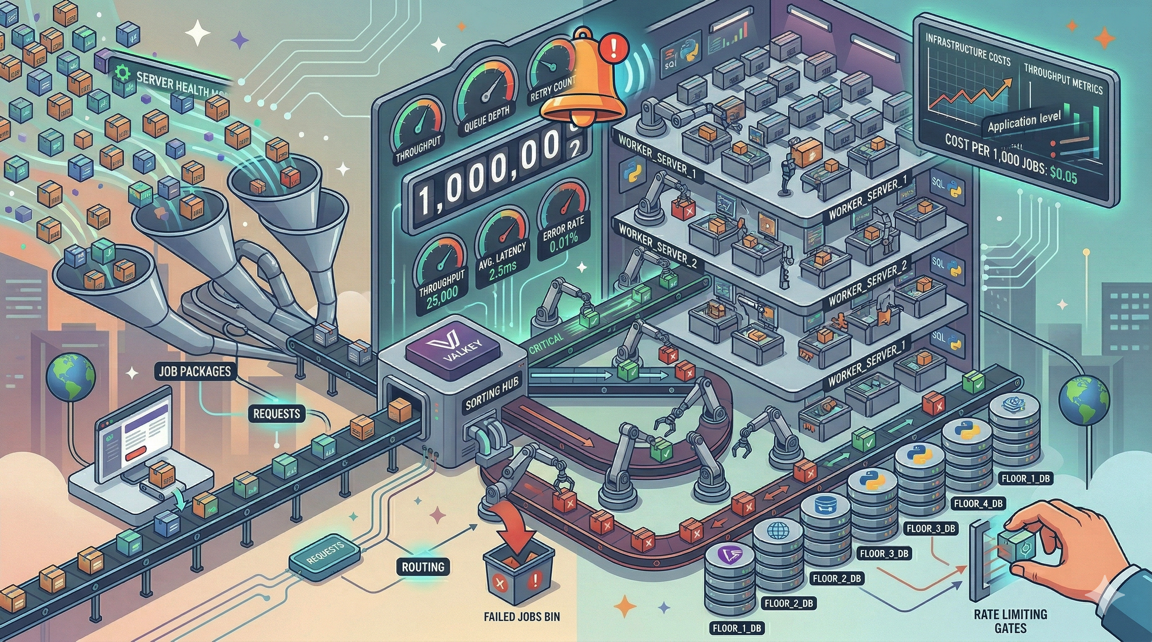
Apr 16 · 11 min read · One million jobs per day sounds like an extraordinary number until you break it down. It is roughly 11.5 jobs per second, sustained over 24 hours. A Laravel application with moderate traffic that sends emails, processes webhooks, syncs data with exte...
Join discussion
Apr 16 · 11 min read · Laravel's queue system is one of the framework's most powerful features and one of its most misunderstood. The documentation covers the basics — dispatch a job, process it later — but production queue management involves decisions about drivers, conc...
Join discussion
Apr 8 · 8 min read · Queues are the backbone of any serious Laravel application. Sending emails, processing images, generating reports, syncing data with external APIs, these operations belong in the background where they won't block your users' requests. Laravel's queue...
Join discussion
Mar 10 · 5 min read · Laravel Queue Workers: Processing Background Jobs at Scale Imagine your e-commerce platform just went viral. Orders are flooding in, confirmation emails need sending, PDFs need generating, and third-party payment webhooks are firing every second. If ...
Join discussionMar 3 · 11 min read · Background Job and Workflow Tools: BullMQ, Temporal, and Celery Every non-trivial application eventually needs to do work outside the request-response cycle. Send an email after signup. Generate a PDF invoice. Process a video upload. Sync data with a...
Join discussion