DDevang Pandya15h ago · 10 min readHow Hotstar Streamed Cricket to 25 Million+ People at Once: Scaling for a Known Traffic SpikeBy Devang Pandya · Cloud Tech by Devang · Cloud • DevOps • AI — Made Simple This post is the full breakdown for the "cricket match night at home" story Reel. If you came here after commenting HOTSTARcloudtechbydevang.hashnode.dev
AAbir Eltaief1d ago · 27 min readArchitecting for Scale: Battle-Tested Scalability Patterns Across AWS, Azure, and GCP (Part 1/5) Series Foreword: Demystifying Complex Cloud Systems Through Design Patterns As an active Multi-Cloud Architect across AWS, Microsoft Azure, and GCP—having recently earned my Google Cloud Certified Prscalability-patterns-modern-distributed-systems.hashnode.dev
AAnish Ansari2d ago · 7 min readSystem Design Drill Day 6: Sharding and Partitioning a MySQL Orders TableThe orders table has grown too big for one server, and another replica won't help. Replicas spread reads, but each one still holds all the data, and every write still lands on the same primary. Past ablog.anishansari.com.np
MMuhammad Ali Mughal1d ago · 8 min readHow to Prevent Double Booking: Locks, Holds and ExpiryBy Muhammad Ali Mughal · Last updated 24 October 2026 Two customers click "Book" on the last slot at the same moment. Both see a confirmation. One of them shows up to find the truck, room or appointmeresume-ai.hashnode.dev
AAnish Ansari3d ago · 7 min readSystem Design Drill Day 5: Load Balancing and Horizontal ScalingYou add a second app server before a big sale. Users start getting logged out at random, product images show up for some people and not others, and the daily report email arrives twice. The code didn'316RMKblog.anishansari.com.np
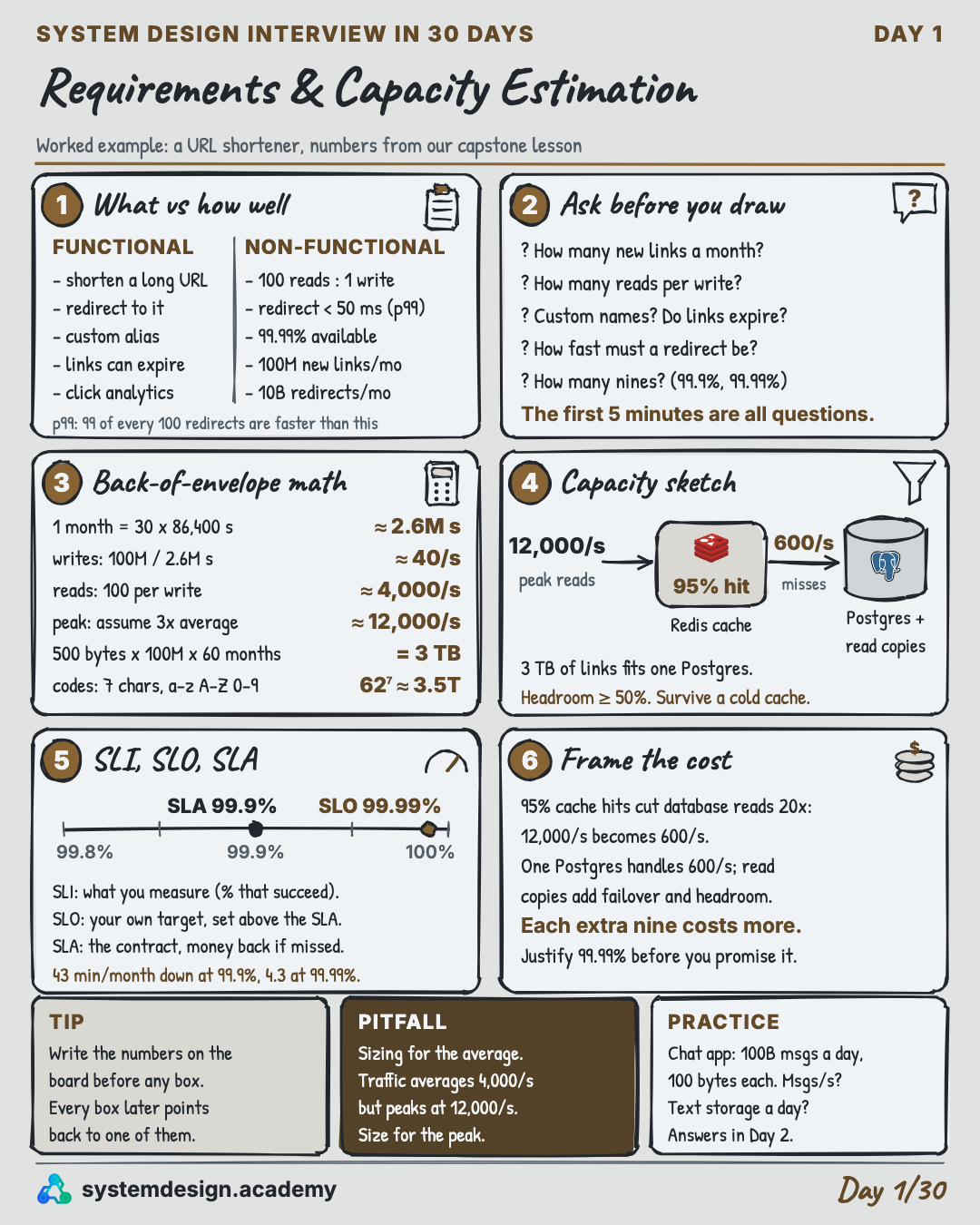
RRONI DAS3d ago · 6 min readTurn a Vague Prompt Into Numbers (System Design Interview in 30 Days, Day 1)"Design a URL shortener." That is the whole prompt. No traffic numbers, no rules, no deadline. Most people pick up the marker and start drawing a load balancer. The interviewer was waiting for somethisystemdesignacademy.hashnode.dev
HHow They Scaled6d ago · 5 min readHow Figma, Notion and Slack handled shardingHorizontal sharding is the move every team hopes to put off. You take one database, split its rows across many, and suddenly every query, migration and on-call runbook has to know where the data liveshowtheyscaled.hashnode.dev
DDevang PandyaOct 18 · 10 min readVertical vs Horizontal Scaling: How Instagram Scaled With a Tiny TeamBy Devang Pandya · Cloud Tech by Devang · Cloud • DevOps • AI — Made Simple In April 2012, Facebook agreed to buy Instagram for about $1 billion. At that time Instagram had around 30 million users andcloudtechbydevang.hashnode.dev
HHow They ScaledOct 18 · 6 min readWhat 11 PostgreSQL scaling stories taught meI've been collecting first-hand "how we scaled" posts from engineering blogs, and PostgreSQL shows up more than any other database: 11 stories from 7 companies so far. Read them back to back and a pathowtheyscaled.hashnode.dev
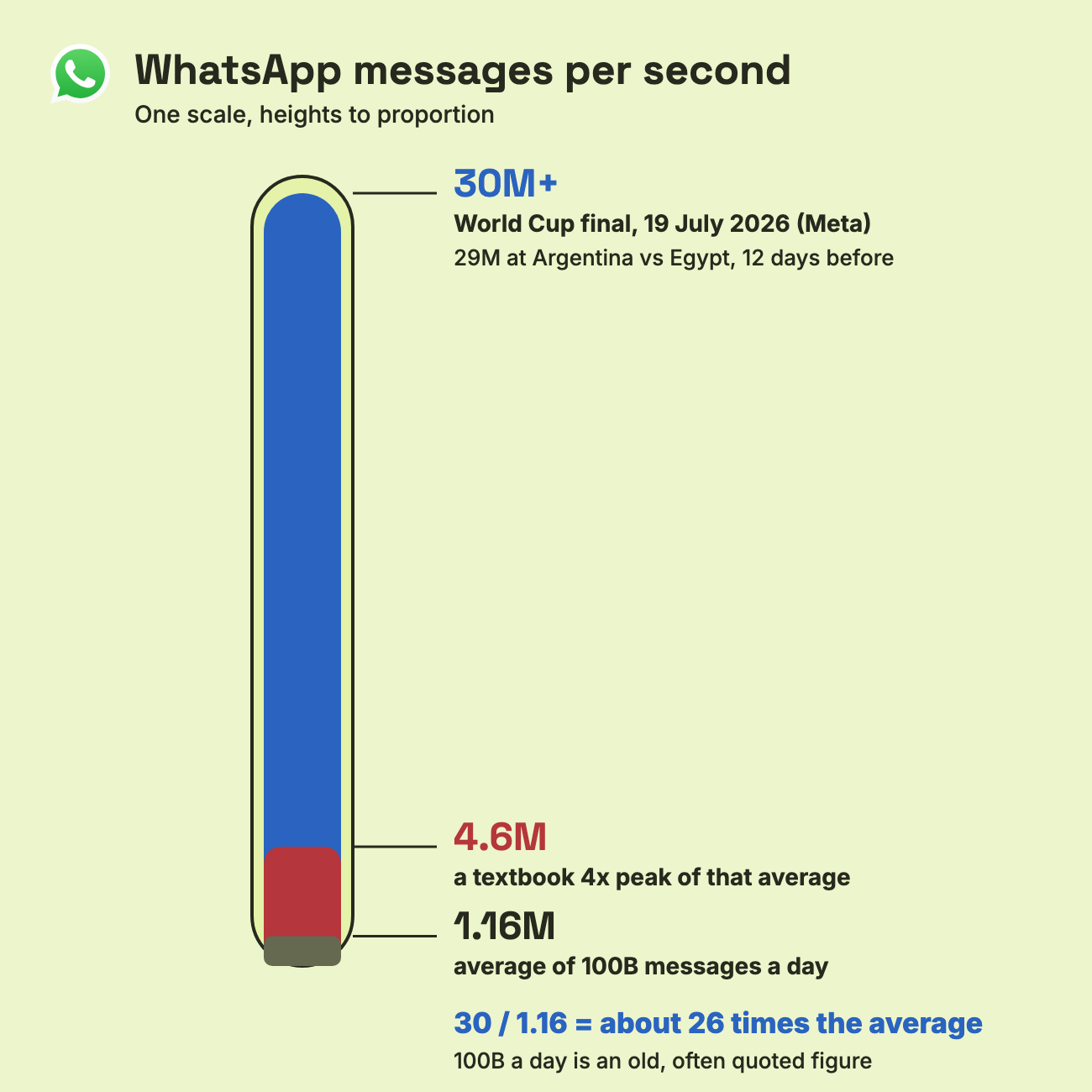
RRONI DASOct 17 · 7 min readWhatsApp passed 30 million messages a second at the World Cup final. Meta's biggest lever was capacity that was already running.On 19 July, Argentina and Spain played the World Cup final, and WhatsApp moved upwards of 30 million messages each second. On 15 October Meta's engineering blog explained how it got through the tournasystemdesignacademy.hashnode.dev