ASAbhijeet Shindeinweeklyupdate.hashnode.dev·Sep 5 · 10 min readHow HTTP Works: What Happens After DNS Hands You an IP1. Why This Topic Matters The last post ended on a promise: once DNS resolves a name to an IP, what actually happens next? Every post in this series up to now — TCP, UDP, and finally DNS — has been ab00
BSBikash Shawinbackendblogs.hashnode.dev·Aug 21 · 12 min readComputer Networks #13: HTTP/2: How HTTP Became FasterIn the previous blog, we looked at HTTP/1.1 and one of its biggest limitations: Head-of-Line Blocking. HTTP/1.1 allowed us to reuse the same TCP connection for multiple requests, but it still had limi00
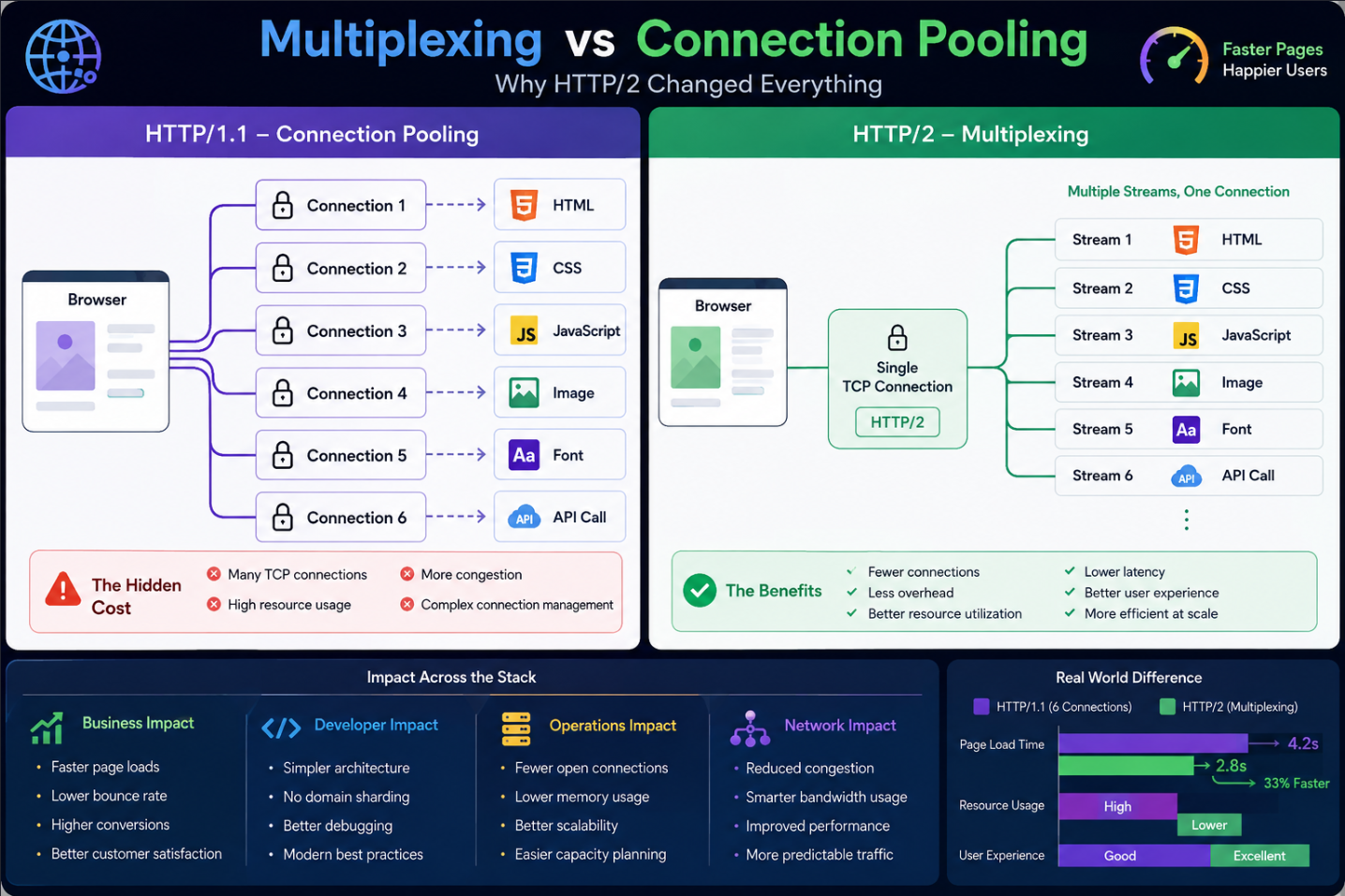
ASAnik Sikderinaniksikder.hashnode.dev·Aug 1 · 8 min readMultiplexing vs Connection Pooling: Why HTTP/2 Changed EverythingIn the previous articles of this series, we explored a recurring theme: Every generation of web infrastructure solved one bottleneck only to expose another. HTTP/1.0 suffered from connection setup ov00
OFOluwaseyi Fatunmoleinfreecodecamp.org·Jul 23 · 50 min readHow Clients and Servers Communicate: Full Handbook on HTTP/1.1, HTTP/2, REST, WebSockets, GraphQL, gRPC, and Protocol BuffersYou've built and consumed APIs. You know what a GET request is, what a JSON response looks like, and how to add an Authorization header. You've used REST, maybe tried GraphQL, and perhaps heard of gRP10
VKVignesH KumaRinhappyvig.hashnode.dev·Jul 9 · 13 min readHTTP 103 Early Hints, Explained the Way I Wish Someone Had Explained It to Me🔍 How I got here I came across HTTP 103 Early Hints while reading about how larger sites shave milliseconds off their load times. The idea is elegant enough to stop and think about: a server usually 00
RCRahul Chaduvulainsoftwareconcepts.hashnode.dev·May 30 · 7 min readUnderstanding HTTP as a Backend EngineerAfter learning about the OSI model, TCP, and UDP, the next thing I wanted to understand was HTTP. As backend engineers, we work with HTTP every day. We build APIs. We send requests. We receive respons10
DSDoogal Simpsonindoogal.dev·Mar 28 · 5 min readWhat About Second HTTP? Solving the 100-File Connection BottleneckTL;DR: HTTP/2 replaces the inefficient six-connection limit of HTTP/1.1 with a single, multiplexed stream. By breaking assets into small, interleaved chunks, it eliminates head-of-line blocking and pr00
OOOluwatomisin Omotoshoinoluwatomisin-omotosho.hashnode.dev·Mar 27 · 9 min readgRPC vs REST in ProductionThe System That Was Working, until It Wasn't When we started building the backend for a telehealth platform, REST was the obvious choice. We had a handful of services like patient records, scheduling,00
TITech Insights Hubintopperblog.hashnode.dev·Feb 12 · 9 min readHTTP/2 Server Push: Performance OptimizationWhy Traditional Server Push Strategies Fail in Modern Environments The original Server Push specification assumed a simpler web architecture. In 2025, several factors make naive implementations problematic: Cache complexity across edge networks: Mode...00
DCDaniele Crucianiindanielecr.hashnode.dev·Dec 11, 2025 · 6 min readUse SNI for routing https requestsThe scenario is a proxy exposing https protocol. SNI, Server Name Indication, happens before ssl handshake negotiation. If SNI is used for routing https request, the same port can be used for multiple domains The problem is on passing the headers: X...00