CCaterfli4d ago · 16 min readReplacing Your Software Takes Months. Reinventing It Can Take Minutes.Why the smartest businesses are learning to get more from the tools they already have instead of rebuilding everything from scratch. There’s a strange thing about business software. A company can spencaterfli.hashnode.dev
BBiz tech pulse hubOct 13 · 3 min readHow Localized AI Is Transforming Business OperationsHow Localized AI Is Transforming Business Operations Businesses operating across different regions face a common challenge: a process that works well in one market may not work equally well in anotherbiztechpulsehub.hashnode.dev
OOglas AISep 21 · 11 min readHow to Build AI Powered Workflow Automation for UAE BusinessesBusinesses in the UAE are increasingly moving beyond isolated AI tools and looking at how artificial intelligence can become part of their actual business operations. A chatbot that answers questions oglas-ai.hashnode.dev
TTwocoreSep 14 · 7 min readHow AI Lead Qualification Can Help Businesses Stop Losing High-Intent LeadsThe short answer: most businesses aren't actually short on leads, they're losing the ones that matter most because nobody catches them in time. AI lead qualification fixes this by scoring and routing 11Stwocore.hashnode.dev
AantrawebSep 10 · 3 min readTallyPrime Integration: Is Your Business Still Entering the Same Data Twice?A practical look at how connecting TallyPrime with other business systems can reduce repeated work and improve data flow. A customer is entered in one system. The same information is entered again in top5besttallyoncloud.hashnode.dev
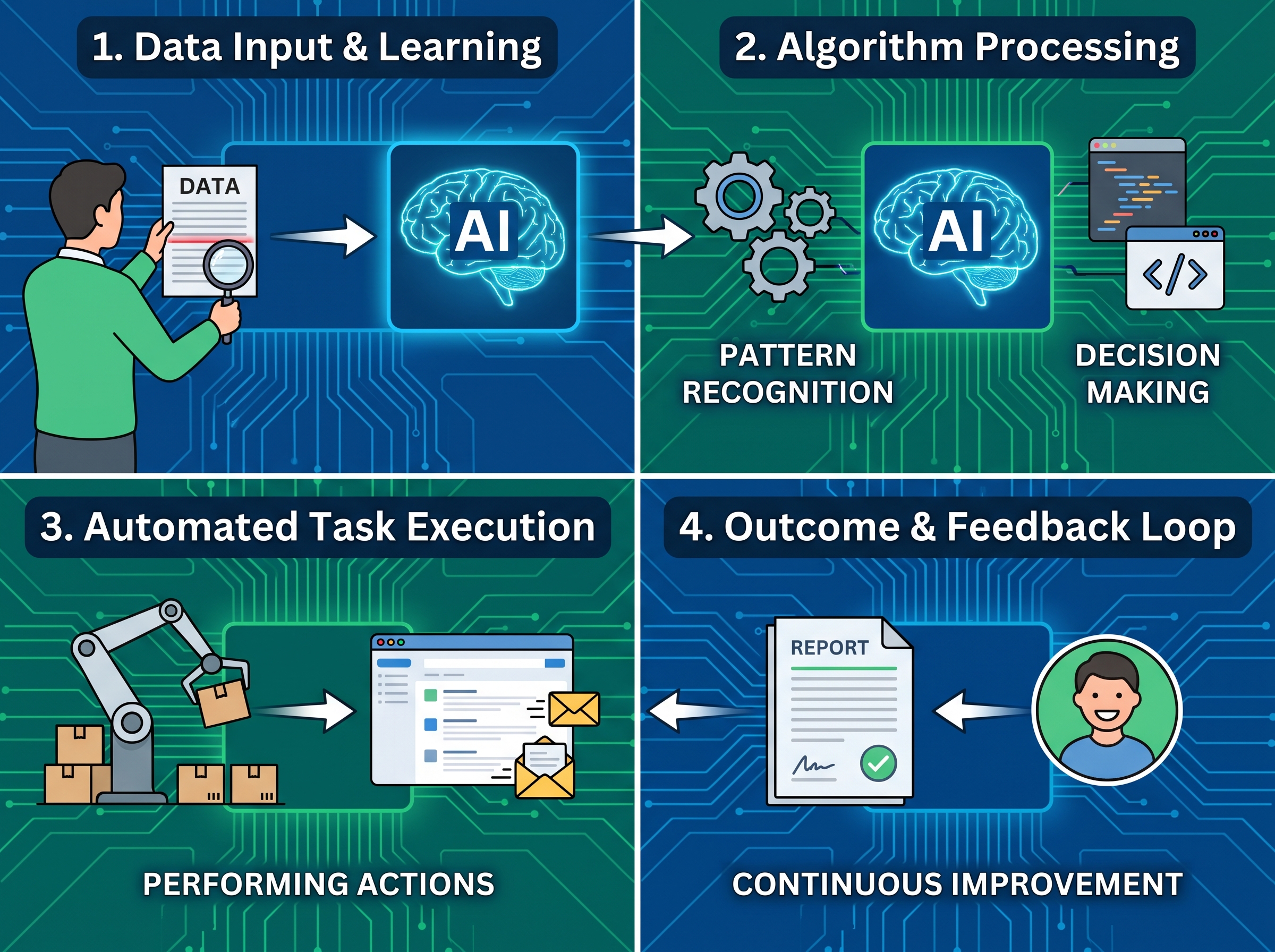
Hhamza automationSep 10 · 5 min readWhat Is AI Automation and How Does It Work?Ask ten people what "AI automation" means and you'll get ten different answers — a chatbot, a robot arm, a smart spreadsheet. The confusion is understandable, because the term gets used loosely. But u11Bhttpshamzaautomatescom.hashnode.dev
BBiz tech pulse hubSep 6 · 1 min readThe Operational Overhead of Manual Application Handoffs in Remote Teams Your remote team can spend hours moving information between applications while important work waits for someone to take the next manual step across asynchronous time zones. A comprehensive review of Nbiztechpulsehub.hashnode.dev
TThe Flux ReadAug 28 · 9 min readReplacing SaaS Bloat with AI Agentic Workflows: The Complete Guide to Automating Business Operations with n8n, Make, and LLMsThe modern enterprise is facing a silent margin killer: SaaS fatigue. Over the last decade, businesses stacked software upon software—paying \(50/month for form builders, \)200/month for customer suppthefluxread.hashnode.dev
OOglas AIAug 19 · 15 min readWhy Businesses Need AI Automation, Not Just AI ToolsOver the past two years, nearly every business has adopted some form of AI. Marketing teams use AI writing assistants. Support teams use chatbots. Finance teams use AI-powered spreadsheet add-ins. On oglas-ai.hashnode.dev
OOglas AIAug 12 · 12 min readWhat Makes a Great ERP Development Company in Dubai?Choosing an ERP partner is one of those decisions that looks simple from the outside and gets complicated fast once you're actually comparing proposals. Every vendor's pitch deck says roughly the sameoglas-ai.hashnode.dev