Feb 23 · 13 min read · This is Week 19 of my data science journey, the week I stopped telling the algorithm what to find and started letting it discover patterns on its own. If you've been following since Week 18, welcome b
Join discussion
Jan 16 · 4 min read · As part of our unsupervised learning series today, we will talk about a famous algorithm of an association type. While exploring unsupervised learning, I came across the Apriori Algorithm. At first, it sounded complex, but once I broke it down with r...
Join discussion
Jan 12 · 6 min read · In our previous article on unsupervised learning, we covered a clustering algorithm. Today we will be covering a common algorithm that comes under the category of dimensionality reduction. So, in machine learning, having more data is usually helpful ...
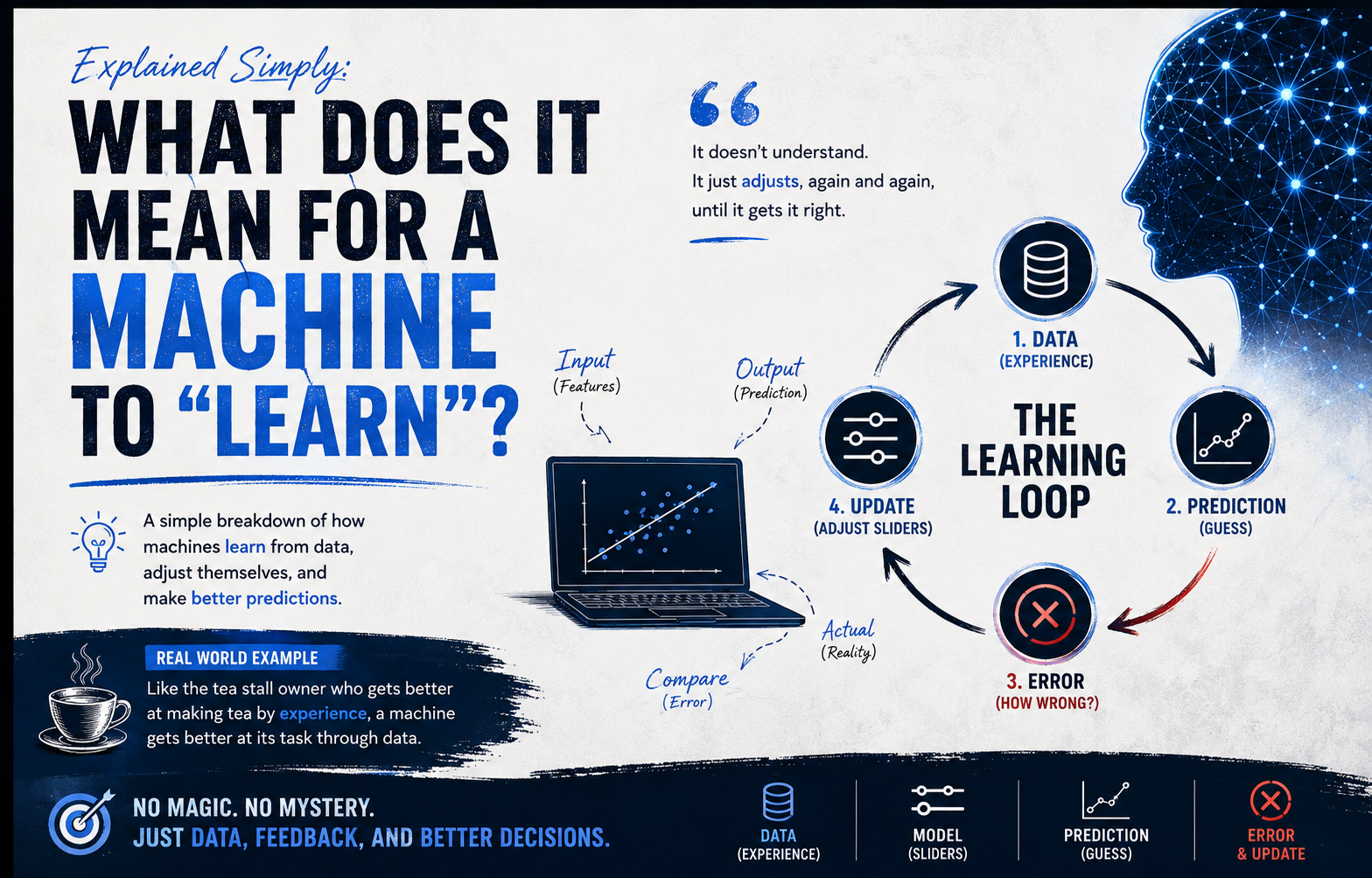
Join discussion
Jan 9 · 4 min read · This is another article in our Unsupervised Learning series. Today, we’ll explore one of the most popular and intuitive algorithms used in unsupervised learning — K-Means Clustering. Before jumping into K-Means, let’s quickly recall what unsupervised...
Join discussion
Dec 11, 2025 · 3 min read · Machine Learning has many branches, but the three most important ones every beginner should know are: ✅ Supervised Learning✅ Unsupervised Learning✅ Reinforcement Learning These categories define how a model learns — whether using labeled data, unlabe...
Join discussionOct 15, 2025 · 4 min read · In the supervised learning series, we learned how models use labeled data to make predictions where both inputs and outputs are known. But what if we only have raw data, with no labels or outcomes defined? That’s where Unsupervised Learning comes in....
Join discussion
Oct 3, 2025 · 35 min read · It is relatively easy to use a machine learning model, all the math has been abstracted, and you can just call a function and add some parameters to train a model. You can achieve good results from using this plug and play method, you can apply multi...
Join discussion
Sep 19, 2025 · 2 min read · Intro Generally, Fraud detection is shown with neatly labelled datasets. But in reality, companies often have to identify suspicious transactions without labels. In this mini-project, I simulated that scenario: I took the popular Kaggle Credit Card F...
Join discussion